
Rudraksha Benefits — Every Mukhi from 1 to 21
What the tradition says each rudraksha is worn for, bead by bead: its deity, its planet, and who reaches for it. One page for all twenty-one, each linking to its own full guide.
What are the benefits of rudraksha?
In the tradition every rudraksha is Shiva’s bead, worn for a steadier mind and for spiritual practice, and each mukhi count adds a purpose of its own: the 1 Mukhi for spiritual practice, the 2 Mukhi for harmony in partnership, the 4 Mukhi for learning, the 5 Mukhi for calm and everyday wear, the 7 Mukhi for livelihood, the 8 Mukhi for removing obstacles, the 9 Mukhi for courage, the 12 Mukhi for leadership and the 14 Mukhi for intuition. These are traditional associations, not medical claims or promised outcomes.
A rudraksha is the seed of the Elaeocarpus tree, and it is named by its mukhi, the natural lines that run from one end of the bead to the other. The tradition reads each count as a different bead, with its own presiding deity and its own graha, so the benefits of rudraksha are really the benefits of a particular mukhi.
Below, every count from 1 to 14 — the beads most people wear — and then the rarer 15 to 21. Each entry gives what the bead is traditionally worn for and links to its own page, which covers who wears it, how to wear it, the mantra, rashi suitability and how to check the bead is genuine.
Rudraksha benefits at a glance, 1 to 21 Mukhi
| Mukhi | Deity | Planet | Traditionally worn for |
|---|---|---|---|
| 1 Mukhi | Lord Shiva himself | Surya (the Sun) | Spiritual practice and moksha; Loosening the hold of ego; A lifetime of devotion to Shiva |
| 2 Mukhi | Ardhanarishvara — Shiva and Parvati as one | Chandra (the Moon) | Harmony in marriage and partnership; Family unity; Reconciling two natures, inner or outer |
| 3 Mukhi | Agni, the fire | Mangal (Mars) | Fresh starts; Release from the weight of the past; Energy, confidence and courage |
| 4 Mukhi | Brahma, the creator | Budha (Mercury) | Learning and memory; Speech and expression; Creativity in every craft |
| 5 Mukhi | Kalagni Rudra — Shiva as the fire of time | Brihaspati (Jupiter) | Calm and general wellbeing; Steadying the mind for daily practice; Japa — it is the bead of the 108-bead mala |
| 6 Mukhi | Kartikeya, commander of the divine armies | Shukra (Venus) | Willpower and disciplined action; Focus; Charisma; Steadiness under pressure |
| 7 Mukhi | Mahalakshmi, goddess of fortune | Shani (Saturn) | Steady, rightful livelihood; Stability through lean seasons; Easing the weight of Saturn |
| 8 Mukhi | Ganesha, remover of obstacles | Rahu | Removing obstacles; New beginnings carried through; Clarity where Rahu brings confusion |
| 9 Mukhi | Durga, the nine-formed goddess | Ketu | Fearlessness and courage; Protection; Strength through fear, grief or hostility |
| 10 Mukhi | Vishnu, the preserver | No single graha | All-round protection; Shelter from negativity and ill intent; Fears that have no single face |
| 11 Mukhi | Hanuman and the eleven Rudras | No single graha | Devotion and self-command; Wisdom and right judgement; Fearlessness born of devotion |
| 12 Mukhi | Surya, the Sun | Surya (the Sun) | Authority and leadership; Vitality and radiance; Carrying responsibility in public view |
| 13 Mukhi | Kamadeva and Indra | Shukra (Venus) | Charisma and persuasion; Refinement and accomplishment; The arts and performance |
| 14 Mukhi | Hanuman — the Devmani, "jewel of the gods" | Shani (Saturn) | Intuition and the third eye (ajna); Clear sight in decisions; The heaviest passages of Saturn |
| 15 Mukhi | Pashupatinath — Shiva as lord of all beings | No single graha | Compassion; The work of care and healing; Devotion to Pashupatinath |
| 16 Mukhi | Mahamrityunjaya — Shiva, conqueror of death | No single graha | Freedom from fear; Protection of the household and those one loves; Victory (Jai) |
| 17 Mukhi | Katyayani and Vishwakarma, the divine architect | No single graha | Building wealth in its widest sense; Raising something large and lasting; Manifestation |
| 18 Mukhi | Bhumi Devi, the Earth herself | No single graha | Land, harvest and property; Patient cultivation; Steadiness |
| 19 Mukhi | Narayana — Vishnu resting on the waters | No single graha | Complete provision; Abundance as grace; Fulfilment of needs across life |
| 20 Mukhi | Brahma — the creative absolute | No single graha | Knowledge in its highest register; Vision and learning, sacred and worldly |
| 21 Mukhi | Kubera, lord of treasures | No single graha | Abundance guarded and preserved; Wealth kept for generations; A family legacy |
Traditional association as the texts and living practice hand it down — not a medical claim or a promised outcome.
Benefits of 1 to 14 Mukhi Rudraksha
The fourteen counts the siddha mala strings together, and the beads most people wear.
1 Mukhi Rudraksha benefits
In the tradition, the 1 Mukhi Rudraksha is the bead of Lord Shiva himself, under Surya (the Sun), worn for spiritual practice and moksha, loosening the hold of ego, and a lifetime of devotion to Shiva.
- ·Spiritual practice and moksha
- ·Loosening the hold of ego
- ·A lifetime of devotion to Shiva
2 Mukhi Rudraksha benefits
In the tradition, the 2 Mukhi Rudraksha is the bead of Ardhanarishvara — Shiva and Parvati as one, under Chandra (the Moon), worn for harmony in marriage and partnership, family unity, and reconciling two natures, inner or outer.
- ·Harmony in marriage and partnership
- ·Family unity
- ·Reconciling two natures, inner or outer
3 Mukhi Rudraksha benefits
In the tradition, the 3 Mukhi Rudraksha is the bead of Agni, the fire, under Mangal (Mars), worn for fresh starts, release from the weight of the past, and energy, confidence and courage.
- ·Fresh starts
- ·Release from the weight of the past
- ·Energy, confidence and courage
4 Mukhi Rudraksha benefits
In the tradition, the 4 Mukhi Rudraksha is the bead of Brahma, the creator, under Budha (Mercury), worn for learning and memory, speech and expression, and creativity in every craft.
- ·Learning and memory
- ·Speech and expression
- ·Creativity in every craft
5 Mukhi Rudraksha benefits
In the tradition, the 5 Mukhi Rudraksha is the bead of Kalagni Rudra — Shiva as the fire of time, under Brihaspati (Jupiter), worn for calm and general wellbeing, steadying the mind for daily practice, and japa — it is the bead of the 108-bead mala.
- ·Calm and general wellbeing
- ·Steadying the mind for daily practice
- ·Japa — it is the bead of the 108-bead mala
6 Mukhi Rudraksha benefits
In the tradition, the 6 Mukhi Rudraksha is the bead of Kartikeya, commander of the divine armies, under Shukra (Venus), worn for willpower and disciplined action, focus, charisma, and steadiness under pressure.
- ·Willpower and disciplined action
- ·Focus
- ·Charisma
- ·Steadiness under pressure
7 Mukhi Rudraksha benefits
In the tradition, the 7 Mukhi Rudraksha is the bead of Mahalakshmi, goddess of fortune, under Shani (Saturn), worn for steady, rightful livelihood, stability through lean seasons, and easing the weight of Saturn.
- ·Steady, rightful livelihood
- ·Stability through lean seasons
- ·Easing the weight of Saturn
8 Mukhi Rudraksha benefits
In the tradition, the 8 Mukhi Rudraksha is the bead of Ganesha, remover of obstacles, under Rahu, worn for removing obstacles, new beginnings carried through, and clarity where Rahu brings confusion.
- ·Removing obstacles
- ·New beginnings carried through
- ·Clarity where Rahu brings confusion
9 Mukhi Rudraksha benefits
In the tradition, the 9 Mukhi Rudraksha is the bead of Durga, the nine-formed goddess, under Ketu, worn for fearlessness and courage, protection, and strength through fear, grief or hostility.
- ·Fearlessness and courage
- ·Protection
- ·Strength through fear, grief or hostility
10 Mukhi Rudraksha benefits
In the tradition, the 10 Mukhi Rudraksha is the bead of Vishnu, the preserver, worn for all-round protection, shelter from negativity and ill intent, and fears that have no single face.
- ·All-round protection
- ·Shelter from negativity and ill intent
- ·Fears that have no single face
11 Mukhi Rudraksha benefits
In the tradition, the 11 Mukhi Rudraksha is the bead of Hanuman and the eleven Rudras, worn for devotion and self-command, wisdom and right judgement, and fearlessness born of devotion.
- ·Devotion and self-command
- ·Wisdom and right judgement
- ·Fearlessness born of devotion
12 Mukhi Rudraksha benefits
In the tradition, the 12 Mukhi Rudraksha is the bead of Surya, the Sun, worn for authority and leadership, vitality and radiance, and carrying responsibility in public view.
- ·Authority and leadership
- ·Vitality and radiance
- ·Carrying responsibility in public view
13 Mukhi Rudraksha benefits
In the tradition, the 13 Mukhi Rudraksha is the bead of Kamadeva and Indra, under Shukra (Venus), worn for charisma and persuasion, refinement and accomplishment, and the arts and performance.
- ·Charisma and persuasion
- ·Refinement and accomplishment
- ·The arts and performance
14 Mukhi Rudraksha benefits
In the tradition, the 14 Mukhi Rudraksha is the bead of Hanuman — the Devmani, "jewel of the gods", under Shani (Saturn), worn for intuition and the third eye (ajna), clear sight in decisions, and the heaviest passages of Saturn.
- ·Intuition and the third eye (ajna)
- ·Clear sight in decisions
- ·The heaviest passages of Saturn
Benefits of 15 to 21 Mukhi Rudraksha
Rare beads, found a few at a time in a harvest, and kept and worn singly.
15 Mukhi Rudraksha benefits
In the tradition, the 15 Mukhi Rudraksha is the bead of Pashupatinath — Shiva as lord of all beings, worn for compassion, the work of care and healing, and devotion to Pashupatinath.
- ·Compassion
- ·The work of care and healing
- ·Devotion to Pashupatinath
16 Mukhi Rudraksha benefits
In the tradition, the 16 Mukhi Rudraksha is the bead of Mahamrityunjaya — Shiva, conqueror of death, worn for freedom from fear, protection of the household and those one loves, and victory (Jai).
- ·Freedom from fear
- ·Protection of the household and those one loves
- ·Victory (Jai)
17 Mukhi Rudraksha benefits
In the tradition, the 17 Mukhi Rudraksha is the bead of Katyayani and Vishwakarma, the divine architect, worn for building wealth in its widest sense, raising something large and lasting, and manifestation.
- ·Building wealth in its widest sense
- ·Raising something large and lasting
- ·Manifestation
18 Mukhi Rudraksha benefits
In the tradition, the 18 Mukhi Rudraksha is the bead of Bhumi Devi, the Earth herself, worn for land, harvest and property, patient cultivation, and steadiness.
- ·Land, harvest and property
- ·Patient cultivation
- ·Steadiness
19 Mukhi Rudraksha benefits
In the tradition, the 19 Mukhi Rudraksha is the bead of Narayana — Vishnu resting on the waters, worn for complete provision, abundance as grace, and fulfilment of needs across life.
- ·Complete provision
- ·Abundance as grace
- ·Fulfilment of needs across life
20 Mukhi Rudraksha benefits
In the tradition, the 20 Mukhi Rudraksha is the bead of Brahma — the creative absolute, worn for knowledge in its highest register and vision and learning, sacred and worldly.
- ·Knowledge in its highest register
- ·Vision and learning, sacred and worldly
21 Mukhi Rudraksha benefits
In the tradition, the 21 Mukhi Rudraksha is the bead of Kubera, lord of treasures, worn for abundance guarded and preserved, wealth kept for generations, and a family legacy.
- ·Abundance guarded and preserved
- ·Wealth kept for generations
- ·A family legacy
Benefits of Gauri Shankar, Ganesh, Trijuti and the other special rudraksha
Beads named by their form rather than a face count: joined beads, the trunk-faced Ganesh, the half-moon Savar and the faceless Nirakar.
Gauri Shankar Rudraksha benefits
In the tradition, the Gauri Shankar Rudraksha, two beads grown naturally joined, is the bead of Shiva and Parvati as one, worn for harmony in marriage and partnership, peace in the family, and balance within oneself.
Gauri Shankar benefits in fullGarbha Gauri Rudraksha benefits
In the tradition, the Garbha Gauri Rudraksha, a small bead grown naturally joined to a larger one, is the bead of mother and child, kept for the protection of mother and child and the bond between parent and child.
Garbha Gauri benefits in fullGanesh Rudraksha benefits
In the tradition, the Ganesh Rudraksha, a bead with a natural trunk-like projection, is Ganesha’s bead, worn for removing obstacles, auspicious new beginnings, and success in studies and new work.
Ganesh benefits in fullTrijuti Rudraksha benefits
In the tradition, the Trijuti Rudraksha, three beads grown naturally joined, is the bead of the Trimurti, Brahma, Vishnu and Shiva, kept for the whole of life held in balance: creation, preservation and dissolution in one form.
Trijuti benefits in fullSavar One Mukhi Rudraksha benefits
In the tradition, the Savar 1 Mukhi, a crescent-shaped one-faced bead, carries the 1 Mukhi’s associations, Shiva himself and spiritual practice, in a form people can actually obtain; it has long served in place of the very rare round 1 Mukhi.
Savar 1 Mukhi benefits in fullNirakar Rudraksha benefits
In the tradition, the Nirakar Rudraksha, a bead with no mukhi lines at all, is the bead of the formless absolute, Para Brahman, kept as a meditation on the formless rather than worn for any worldly aim.
Nirakar (0 Mukhi) benefits in fullAbove twenty-one faces the classical sources grow quiet; the 22 to 27 Mukhi share one honest page rather than six invented ones.
Which rudraksha for what: choosing by intention
The quickest way to choose. Each line points only to beads the tradition gives that purpose.
- Spiritual practice and meditation: 1 Mukhi, 5 Mukhi
- Calm, everyday wear, or a first bead: 5 Mukhi
- Harmony in marriage, partnership and family: 2 Mukhi
- A fresh start, energy and confidence: 3 Mukhi
- Study, memory and speech: 4 Mukhi
- Focus and willpower: 6 Mukhi
- Livelihood, wealth and stability: 7 Mukhi, 17 Mukhi, 19 Mukhi, 21 Mukhi
- Removing obstacles before something new: 8 Mukhi
- Courage and fearlessness: 9 Mukhi, 11 Mukhi, 16 Mukhi
- Protection: 10 Mukhi, 9 Mukhi, 16 Mukhi
- Leadership and authority: 12 Mukhi
- Charisma, the arts and performance: 13 Mukhi
- Intuition and clear decisions: 14 Mukhi
- Compassion and caring work: 15 Mukhi
- Land, property and harvest: 18 Mukhi
- Knowledge and vision: 20 Mukhi
Two other ways are traditional too: choosing by your Moon sign, set out sign by sign on the rudraksha-by-rashi pages, and simply asking someone who handles the beads every day. If none of it settles, the 5 Mukhi is suitable for everyone.
The benefits belong to a real bead
Every word above assumes a genuine rudraksha with the count it claims. The common fakes are lines carved into a lower count, two beads glued together, and beads moulded from resin or wood, and the higher and rarer the count, the more of them there are.
A genuine bead’s lines run unbroken from pole to pole as natural valleys the surface grain flows around. Our identification guide shows each fake and how to spot it. And our answer at every count is the same: photographs and video of your exact bead before you pay if you ask, the count and origin confirmed in writing, and a lifetime authenticity guarantee after.
Questions people ask
What are the benefits of rudraksha?
In the tradition every rudraksha is worn for a steadier mind and for spiritual practice, and each mukhi count adds its own purpose: 1 Mukhi spiritual practice, 2 Mukhi harmony in partnership, 3 Mukhi a fresh start, 4 Mukhi learning, 5 Mukhi calm, 6 Mukhi focus, 7 Mukhi livelihood, 8 Mukhi removing obstacles, 9 Mukhi courage, 10 Mukhi protection, 11 Mukhi self-command, 12 Mukhi leadership, 13 Mukhi charisma and 14 Mukhi intuition. These are traditional associations, not medical claims.
How many types of rudraksha are there?
Rudraksha are named by their mukhi count. The classical lists run from 1 to 21 Mukhi, ending with the 21 Mukhi of Kubera; beads of 22 to 27 faces are found rarely, and the faceless Nirakar is rarer still. Each count from 1 to 21 has its own benefits page here, and 22 to 27 share one.
Which rudraksha is the most powerful?
The tradition places the 1 Mukhi highest, as the bead of Shiva himself. But it does not rank beads for a wearer: the right bead is the one whose purpose matches yours, and the 5 Mukhi, the commonest count, is held suitable for everyone.
Which rudraksha should I wear first?
The 5 Mukhi. It is the bead of Kalagni Rudra, worn for calm and steadiness in daily practice, it is the bead a 108-bead japa mala is strung from, and the tradition holds it suitable for every wearer.
Which rudraksha is good for money and wealth?
The 7 Mukhi, the bead of Mahalakshmi, is traditionally worn for steady, rightful livelihood and stability through lean seasons. Among the rare counts, the 17 Mukhi is worn for building wealth in its widest sense, the 19 Mukhi for complete provision and the 21 Mukhi, Kubera’s bead, for wealth kept for generations.
Which rudraksha is good for students?
The 4 Mukhi, the bead of Brahma, is the tradition’s bead of learning, memory and speech. The 6 Mukhi, worn for focus and willpower, is often chosen alongside it.
Which rudraksha is good for health?
The tradition associates the 5 Mukhi with calm and general wellbeing. But a rudraksha is a dried seed on a thread, not a treatment: there is no documented physiological effect of wearing one, and it is no substitute for anything you would do for your health.
Can I wear more than one rudraksha?
Yes. Beads of different counts are traditionally worn together: the 5 Mukhi beside any other is the commonest pairing, and the siddha mala strings one of every count from 1 to 14.
Do Nepali and Indonesian rudraksha have the same benefits?
Yes. They are the same species, and no classical text ranks beads by country. What differs is size, the depth of the lines, colour and price; the only real problem is an Indonesian bead described as Nepali.
Can women wear rudraksha?
Yes. Women, men and children of any background may wear any mukhi, with no initiation and nobody’s permission, and the benefits the tradition gives each bead are the same for everyone.
Next: browse every mukhi we stock, see each count’s deity and planet in the mukhi meaning chart, or find your bead by birth date with the rashi finder.
Use this chart on your site
Every mukhi from 1 to 21 with its deity, planet and what it is worn for, as one picture. Free to embed with the credit link below; more for writers on our press page.
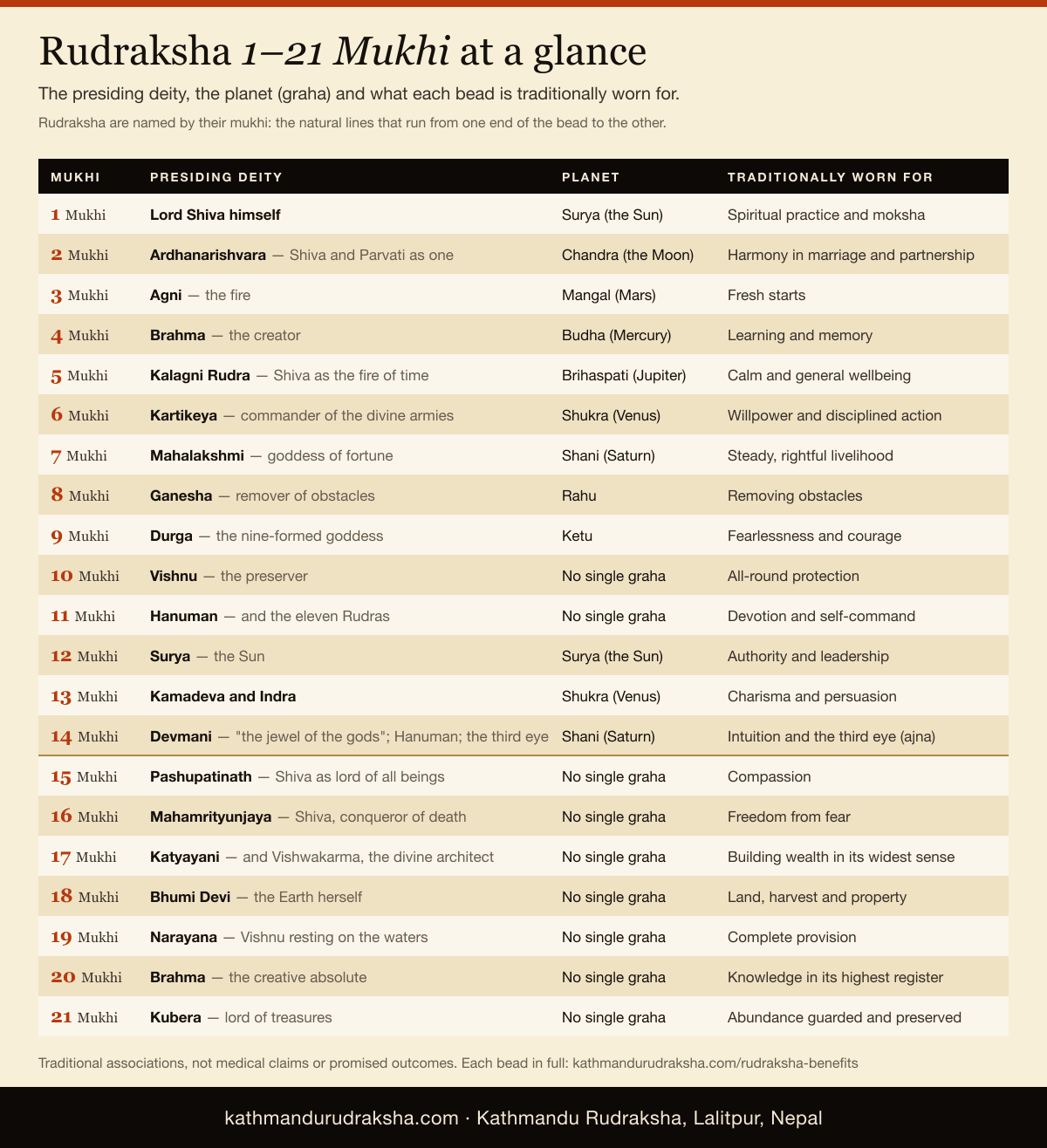
Full-size PNG (1200 px wide) · 1200 × 630 version for social posts
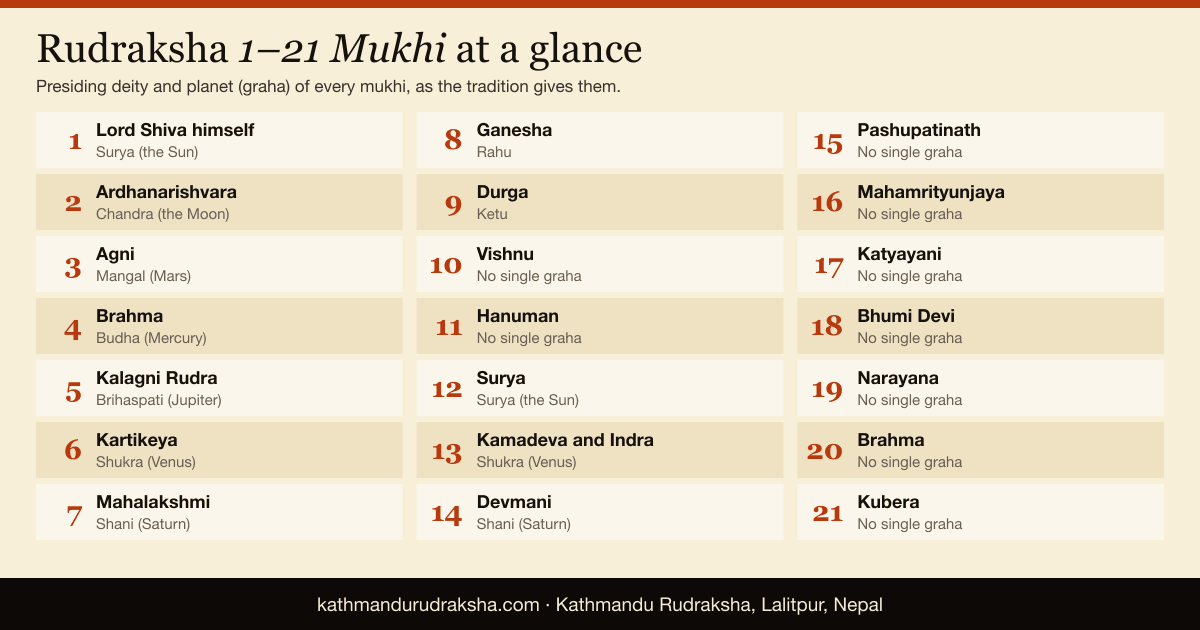
<a href="https://kathmandurudraksha.com/rudraksha-benefits"><img src="https://kathmandurudraksha.com/press/rudraksha-mukhi-chart.png" alt="Rudraksha 1 to 21 Mukhi chart — Kathmandu Rudraksha" width="1200"></a><br>Chart: <a href="https://kathmandurudraksha.com/rudraksha-benefits">Kathmandu Rudraksha</a>