Reference
Rudraksha Mukhi Meanings — The Complete 1 to 27 Chart
Every mukhi from 1 to 27 with its deity, planet and purpose, plus which bead fits which intention, from the family that sorts them daily. See the chart.
By Kathmandu Rudraksha · Published 18 July 2026 · Updated 14 August 2026
Last reviewed: August 2026 · Kathmandu Rudraksha
How to read the chart
A mukhi is a complete natural cleft running from one pole of the bead to the other, and the count of those faces is how the tradition organises everything else. The associations below follow the Shiva Purana’s account and the living practice carried in Nepal and India — and they are exactly that: traditional associations, not promised outcomes. A bead accompanies practice; it does not replace it.
The classical heart of the tradition is 1 to 14 — the counts the texts treat in detail. 15 to 21 carry well-established associations in the later tables, and beyond 21 the classical sources thin out, honestly, into collector territory.
For what each bead is worn for, count by count, with a link to each one’s full guide, see rudraksha benefits, 1 to 21 Mukhi.
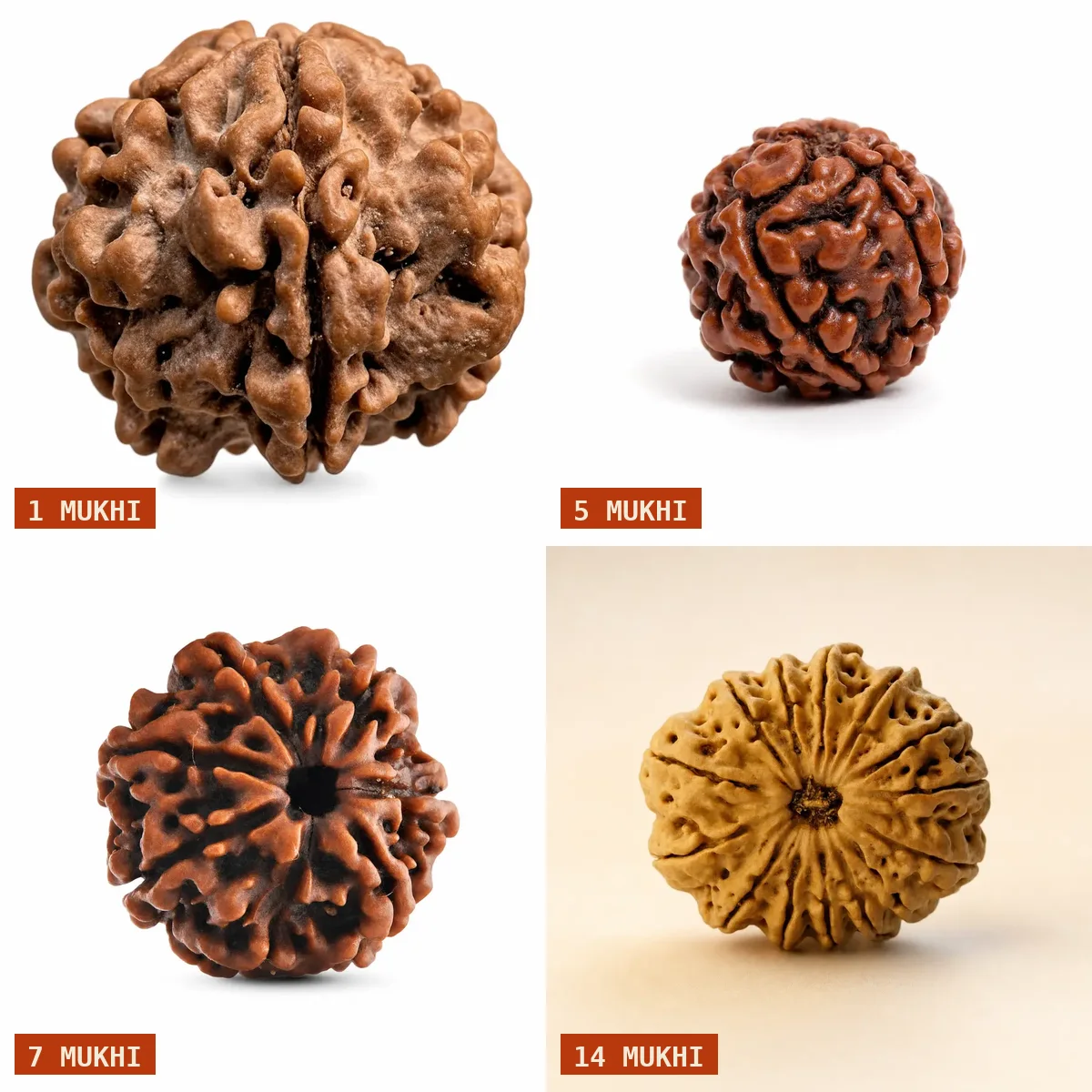
The classical fourteen — 1 to 14 Mukhi
| Mukhi | Deity | Planet | Traditional association |
|---|---|---|---|
| 1 | Lord Shiva himself | Surya (Sun) | The crown of the tradition — pure consciousness; often worshipped on the altar rather than worn |
| 2 | Ardhanarishvara | Chandra (Moon) | Union and harmony — marriage, partnership, family |
| 3 | Agni, the fire | Mangal (Mars) | Energy, confidence, release from the weight of the past |
| 4 | Brahma, the creator | Budha (Mercury) | Learning, memory, and speech — the student’s bead |
| 5 | Kalagni Rudra | Brihaspati (Jupiter) | The universal bead — steadiness and wellbeing; foundation of the japa mala |
| 6 | Kartikeya | Shukra (Venus) | Willpower and follow-through — resolve for the work at hand |
| 7 | Mahalakshmi | Shani (Saturn) | Fortune and stability — the householder’s and merchant’s bead |
| 8 | Ganesha | Rahu | Removal of obstacles — worn at new beginnings |
| 9 | Durga | Ketu | Courage and protection; long associated with women’s strength |
| 10 | Vishnu | None — the ten directions | All-round protection from hostility and fear |
| 11 | Hanuman & the eleven Rudras | — | Discipline and vows — the bead of intense practice |
| 12 | Surya, the Sun | Surya (Sun) | Leadership and steady radiance — for public life |
| 13 | Kamadeva & Indra | Shukra (Venus) | Charisma, refinement, accomplishment — the artist’s bead |
| 14 | Devmani — the third eye | Shani (Saturn) | Clear seeing and decision — “the jewel of the gods” |
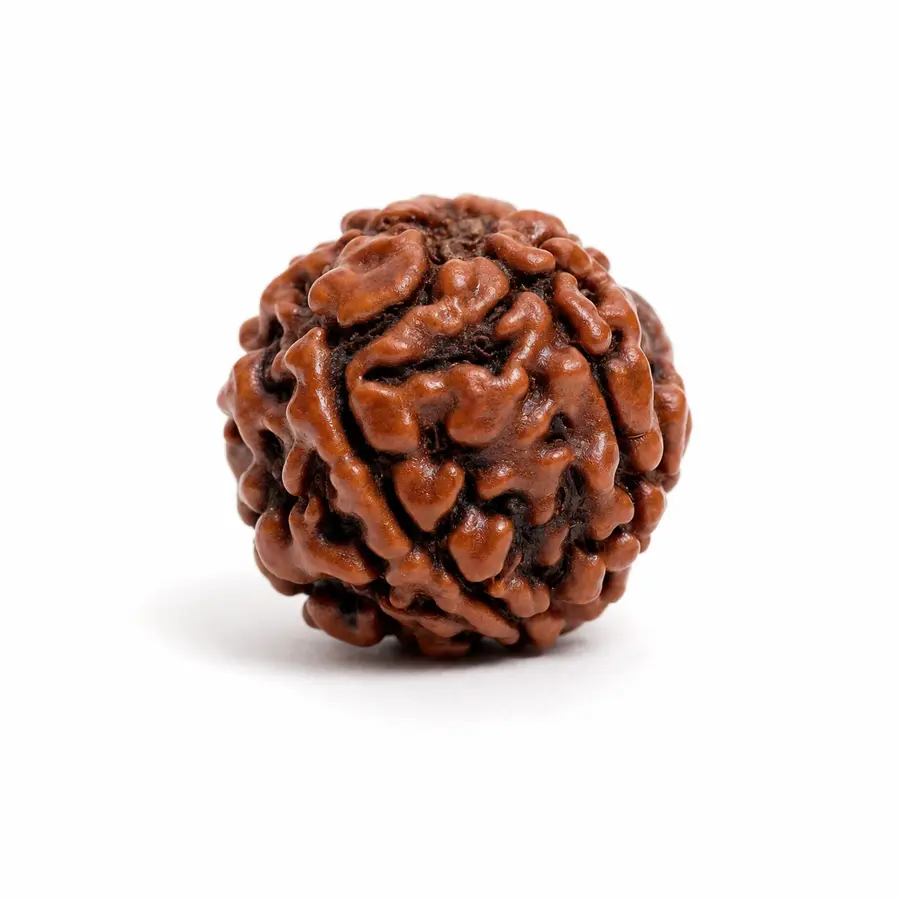
The higher counts — 15 to 21 Mukhi
| Mukhi | Deity | Traditional association |
|---|---|---|
| 15 | Pashupatinath | Compassion of heart — caregivers, healers, devotees of Pashupatinath |
| 16 | Mahamrityunjaya | Protection of the household; freedom from fear |
| 17 | Katyayani & Vishwakarma | Building and wealth in the making — for builders of every kind |
| 18 | Bhumi Devi, the Earth | Land, property, and patient cultivation |
| 19 | Narayana | Complete provision and grace |
| 20 | Brahma — the creative absolute | Knowledge of the highest order — scholars and seers |
| 21 | Kubera, lord of treasures | Guarded wealth — the legacy bead of families and institutions |
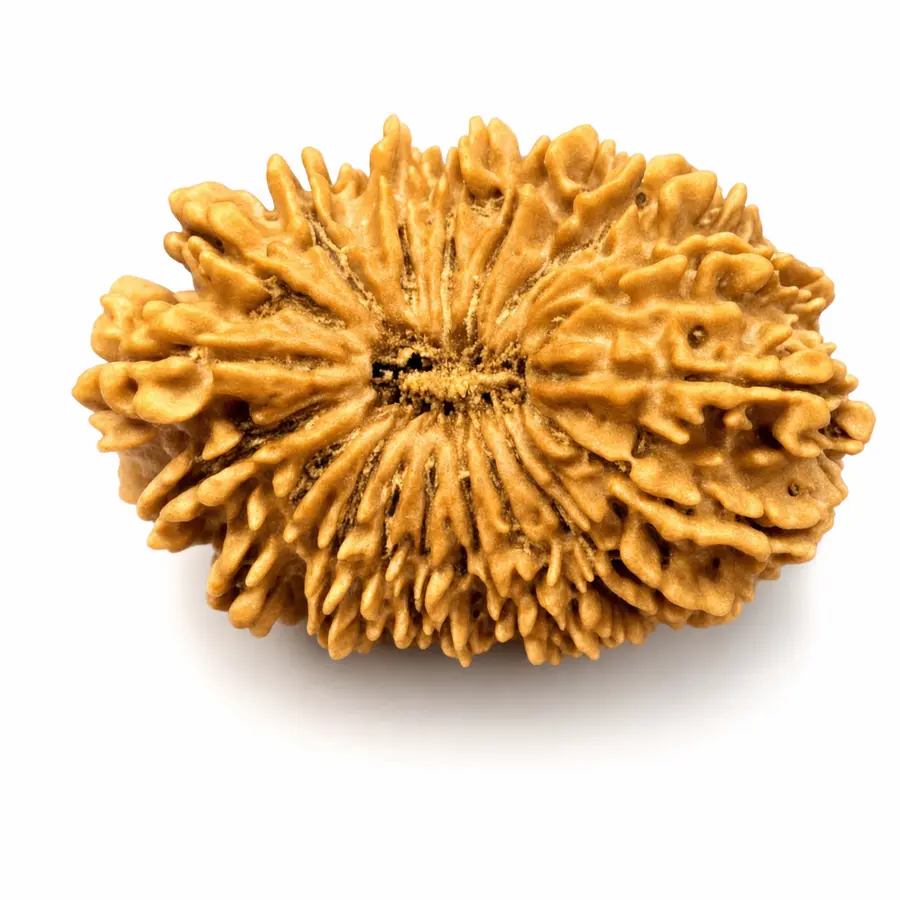
22 to 27 Mukhi — beyond the classical lists
Above 21 faces the classical texts fall quiet, and we say so rather than invent scripture. Beads of 22 to 27 mukhi are genuine botanical rarities — a handful in a season across all of Nepal — prized, kept, worshipped, and inherited as treasures rather than prescribed for daily wear. Each one we handle is priced and documented individually, photographs included, because at this rarity every bead is effectively unique.
So which mukhi is best?
The honest answer: there is no “best”, because the chart is a map of intentions, not a ladder of power. The tradition’s own universal answer for a first bead — for anyone — is the 5 Mukhi. Beyond that, best means matched: to what you are asking of your practice, and to your circumstance.
- For a first bead, everyday steadiness, and japa: the 5 Mukhi.
- For study, memory, and speech: the 4 Mukhi, often joined by a 6.
- For harmony in marriage and family: the 2 Mukhi, or the naturally paired Gauri Shankar.
- For courage and protection: the 9, 10, and 11 Mukhi.
- For work, obstacles, and leadership: the 8 and 12 Mukhi.
- For fortune and the household: the 7 Mukhi.
- For clear decisions: the 14 Mukhi.
If you would like this worked out properly against your own situation, our Find My Rudraksha quiz asks four questions and returns an honest shortlist — or simply message us on WhatsApp and describe what you are seeking.
The classic combinations — Gauri Shankar and the Siddha Mala
Rudraksha are combined the way notes are chorded — by intention. The most famous combination is grown rather than strung — the Gauri Shankar — and the most complete is the assembled Siddha Mala. The pairings below are those most commonly advised in living practice. Lineages differ in the details, which is why we advise individually before you buy any combination.
| Intention | Combination traditionally advised |
|---|---|
| Everyday steadiness & practice | A 5 Mukhi mala on its own — complete in itself |
| Study & examinations | 4 + 6 Mukhi |
| New ventures & obstacles | 8 Mukhi, joined by 12 for leadership |
| Courage & protection | 9 + 10 + 11 Mukhi together |
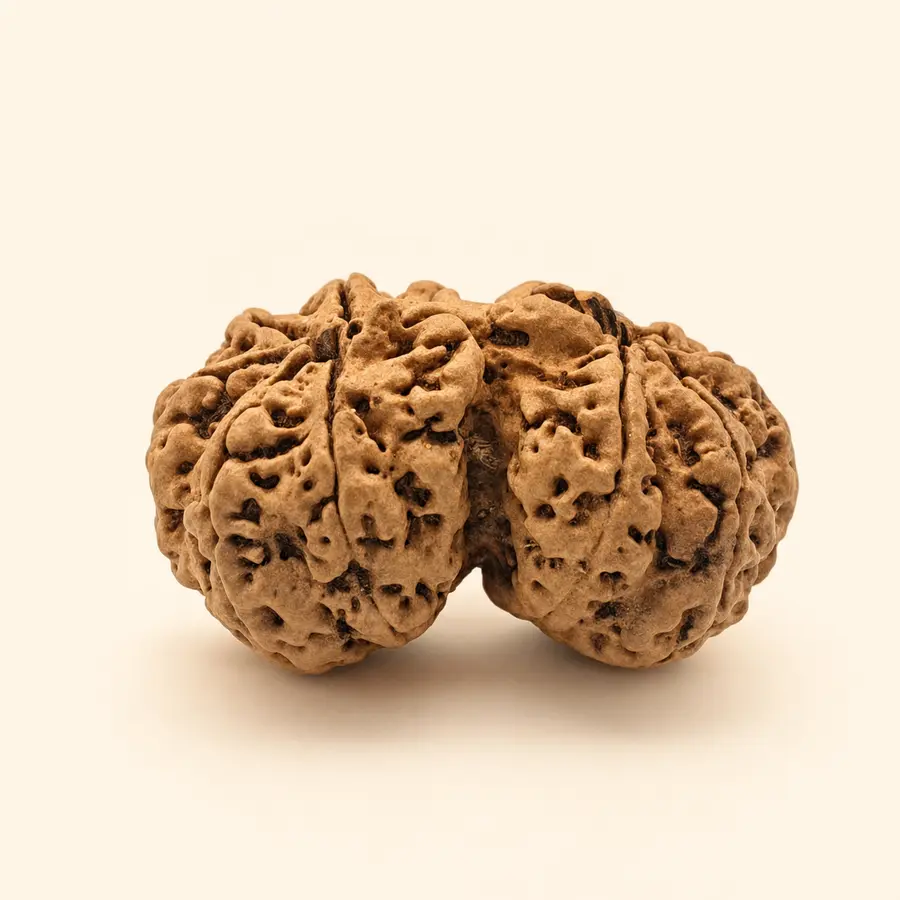
| Marriage & family harmony | 2 Mukhi with a Gauri Shankar |
| Fortune & the household | 7 + 8 Mukhi |
| Discipline of practice | 11 Mukhi with a 5 Mukhi japa mala |
| The complete spectrum | The Siddha Mala — 1 through 14 strung as one |
A combination is worn together at the neck or strung into a single mala; the first-wearing ritual and the rules are the same as for a single bead.
Every count has its own page
This chart is the map; the territory is a full article for each count to twenty-one — who wears it, wearing rules, the mantra, rashi fit, price, and how to verify one — plus a single honest page for everything above: 1 Mukhi · 2 Mukhi · 3 Mukhi · 4 Mukhi · 5 Mukhi · 6 Mukhi · 7 Mukhi · 8 Mukhi · 9 Mukhi · 10 Mukhi · 11 Mukhi · 12 Mukhi · 13 Mukhi · 14 Mukhi · 15 Mukhi · 16 Mukhi · 17 Mukhi · 18 Mukhi · 19 Mukhi · 20 Mukhi · 21 Mukhi · 22–27 Mukhi.
Frequently asked questions
What does mukhi mean on a Rudraksha?
A mukhi, or face, is a complete natural cleft running from the top hole of the bead to the bottom hole. The number of these faces — from 1 to 27 — is how the tradition classifies Rudraksha and assigns each bead its deity, planet, and traditional purpose.
Which mukhi Rudraksha is best for beginners?
The 5 Mukhi. The tradition itself treats it as the universal bead — suitable for everyone, with no special restrictions — and it is the foundation of the classic 108-bead japa mala. Rarer counts come later, matched to specific intentions.
Is a higher mukhi count more powerful?
No — higher counts are rarer, not stronger. The chart maps intentions, not a ladder of power: a 5 Mukhi worn with sincerity serves its wearer completely. Price follows botanical rarity; sanctity does not.
Can I wear more than one mukhi together?
Yes — combining beads by intention is standard living practice, from a simple 4-and-6 for study to the full 1-to-14 Siddha Mala. Wear them together at the neck or strung as one mala, with the same first-wearing ritual as a single bead.
What is the rarest Rudraksha mukhi?
The round Nepali 1 Mukhi is the rarest of the classical counts, and beads above 21 faces are rarer still — a handful in a season. At that rarity every genuine bead is documented and priced individually, and seeing the exact bead before you pay is essential.
Where to go next
- Browse all Mukhi Rudraksha
- Rare Rudraksha
- Siddha Mala collection
- Find My Rudraksha (quiz)
- Can I Wear Rudraksha During Pregnancy?
- 5 Mukhi Rudraksha
- 14 Mukhi Rudraksha
- Gauri Shankar
Keep reading
- Which Rudraksha for Which Planet, God and Purpose: Shani, Rahu, Jupiter, Hanuman, Lakshmi, Career and More
- How to Care for Your Rudraksha — The Complete Guide to Cleaning, Oiling & Storage
- How Rudraksha Supports Manifestation and Spiritual Growth
- Which Mukhi Rudraksha Is the Most Powerful? The Honest Answer
- Rudraksha Size Chart: Sizes in Millimetres and Why Size Changes the Price