
Shaligram — Sacred Stones of Vishnu
Shaligram — saligrama in South India, salagram in the older texts — are sacred fossilized stones found only in the Kali Gandaki river in the Mustang region of Nepal. Each Shaligram is considered a self-manifest form of Lord Vishnu, never to be carved or shaped by human hands. We offer Vishnu Dashavatar Shaligrams and the most-worshipped traditional varieties, each documented with where along the river it was found.
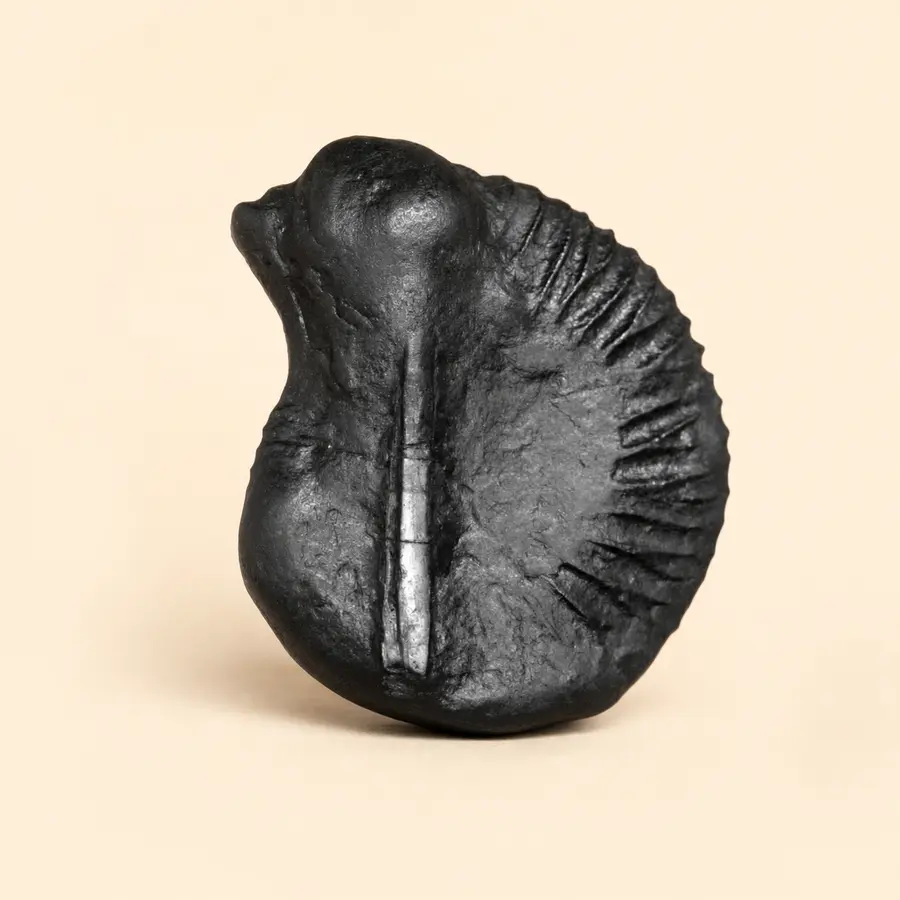
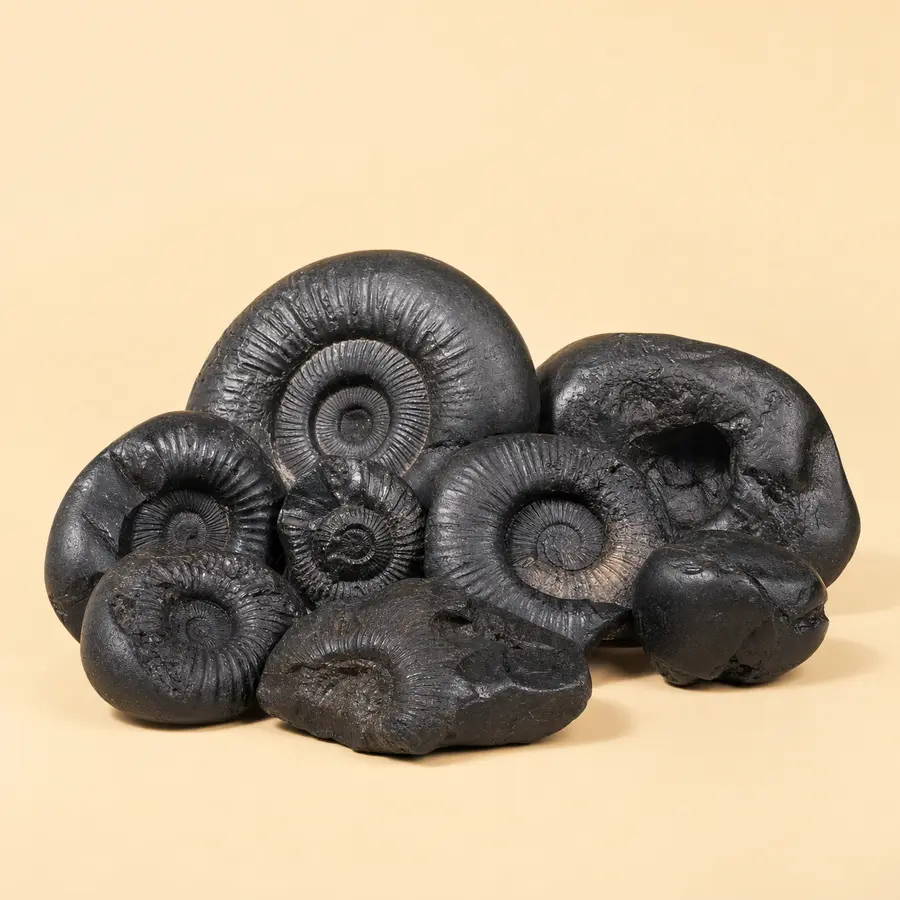
Shaligram, saligrama, salagram — one stone, three spellings
The stone is written शालिग्राम in Devanagari and comes into English as shaligram in the north, saligrama across South India, and salagram in older texts and catalogues. All three name the same thing: a fossil-bearing black stone taken from the bed of the Kali Gandaki river as it runs through Mustang in Nepal, and nowhere else on earth.
What makes it what it is, in the tradition, is that no hand shaped it. A shaligram is svayambhu — self-manifest — a form of Vishnu that arrived already complete, its chakra markings cut by ammonite fossils and river water rather than by a carver. This is why a carved or polished stone is not a shaligram at all, whatever it is sold as, and why we will not offer one.
The varieties are read from the markings: the Dashavatar stones corresponding to the ten avataras, along with the most-worshipped traditional forms. Each stone we hold is documented with where along the river it came from and who brought it out, because provenance is the only claim about a shaligram that can honestly be made.
One thing said plainly, because it is asked and usually dodged. A strand of the tradition holds that a shaligram should be received rather than bought, and there are households that observe this strictly. Where money changes hands here it covers the journey into Mustang, the person who made it, the documentation and the shipping — not a valuation of the deity. If your practice says the stone should come to you as a gift, follow your practice; we would rather lose the order than talk you out of it.
Sponsored worship at Pashupatinath and the other Kathmandu temples, if you would like a puja performed on your behalf, is on the pooja services page.
Read before you choose.
Questions people ask about shaligram
What is a shaligram stone?
A fossil-bearing black stone from the Kali Gandaki river in Mustang, Nepal, revered as a self-manifest form of Vishnu. The spiral markings inside it are ammonite fossils from the sea that lay where the Himalaya now stands. It is worshipped as it was found: never carved, never shaped.
What does shaligram mean in English?
It has no English translation, because it is a name rather than a description — शालिग्राम comes into English only as a transliteration. Where English writing needs a phrase, the usual one is “sacred fossil stone of Vishnu”: sacred because the tradition treats the stone as a self-manifest form of Vishnu, and fossil because the spirals inside it are ammonites — sea creatures that died where the Himalaya now stands. Older English books and museum catalogues spell it salagram, which is the same word.
What are the different types of shaligram?
They are told apart by their markings, not by size or price. The best-known grouping is the Dashavatar set, one stone for each of the ten avataras of Vishnu, with Narasimha, Lakshmi-Narayan, Matsya and Kurma among the forms most often kept in homes. The reading is done from the chakra impressions, the aperture and the colour, and it is a matter of traditional interpretation rather than measurement — which is why we document where along the Kali Gandaki each stone came from and let a reader or a priest identify it, instead of printing a confident label on a stone we did not find ourselves.
Is saligrama the same as shaligram?
Yes. Saligrama is the usual South Indian transliteration, salagram appears in older English texts, and shaligram is the common North Indian form. One Sanskrit word, शालिग्राम, and one stone from one river.
Where do shaligram stones come from?
Only from the Kali Gandaki, and principally the stretch through the Mustang region of Nepal above Muktinath. The river cuts through marine sediment laid down before the Himalaya rose, which is why its stones carry ammonite and no other river’s do. Any stone described as a shaligram from elsewhere is something else.
Can a shaligram be bought and sold?
Practice differs, and we would rather say so than sell around it. Part of the tradition holds that the stone should be received as a gift and never priced; other households have obtained shaligrams through exchange for generations. What we charge covers collection from the river, documentation and shipping. If your own practice forbids purchase, we would rather you kept it.
How is a shaligram worshipped at home?
The observances vary widely by household and lineage, so we will describe rather than prescribe: the stone is commonly kept in the home shrine, bathed with water and offered tulsi leaves, and treated as a resident deity rather than an object on display. Your family practice or your priest is a better guide here than a shop is.
Do you ship shaligram internationally?
Yes, tracked from Kathmandu worldwide, typically three to twelve days, packed for a stone rather than for a bead. Each ships with its provenance note. For India we quote in rupees alongside dollars and send tracking the day it leaves.
Not sure which one?
Message us on WhatsApp. We'll send you photos of what's in stock today and help you choose based on your intention. Reply within hours from Kathmandu.
Free WhatsApp consultation