Press & Photos
Writing about rudraksha, Nepal’s bead trade or the farmers who grow it? Here are the facts about us, a few stories worth telling, photographs you may use, and a chart you can embed.
About the shop
- Kathmandu Rudraksha (काठमाडौं रुद्राक्ष) is a private firm registered with the Government of Nepal in Lalitpur: firm registration no. 001-2775, PAN 127880484. See the certificates
- It is run by its proprietor, Bikram Basnet, from Pattipa Marg Uttar, Lalitpur, in the Kathmandu Valley. About the shop
- Its beads come from growers in the Arun and Tamur valleys of eastern Nepal, among them Bhojpur, the hills around Dingla, and Sankhuwasabha. Rudraksha farming in Nepal
- About 140 farmers list beads and answer buyer requests through the shop’s app. How buying works
- It sells to buyers worldwide by tracked courier, usually 3–12 days: the shop’s own pieces from Kathmandu, while a bead bought from a grower may be shipped by that grower directly. Shipping
- Before a buyer pays, they are sent daylight photographs and a video of the exact bead they will receive. What happens on every deal
- Every rudraksha it sells carries a lifetime guarantee: if an independent laboratory or a recognised authenticity expert finds in writing that a bead it sold is not genuine, it refunds it in full, with no time limit. The guarantee in full
Story ideas
The farmers’ side of the trade
In the usual route a grower’s household sells a whole unsorted sack to a travelling collector for one price, before anyone knows which rare beads it holds. Growers who sell through the shop list their own beads under their own names, set their own price, and are paid directly.
Rudraksha farming in NepalHow to tell a real Nepali bead
The lines of a genuine bead run unbroken from pole to pole; carved grooves are shallow or stop short, and two beads glued together show a seam. The popular float test proves nothing.
How to identify a real rudrakshaOne harvest a year
The fruit ripens after the monsoon and turns deep blue; collection runs from around late August into the Dashain and Tihar weeks. The flesh is removed and the stones washed and dried in shade. There is one harvest a year, so a bead bought in spring was collected the autumn before.
The harvest, month by monthNepali and Indonesian rudraksha
Both are genuine rudraksha of the same species. Java produces enormous numbers of small, shallow-grooved beads; the Nepali hills produce fewer, larger ones with deeper lines. The real problem is an Indonesian bead described as Nepali.
Nepali vs Indonesian rudrakshaFree photos for articles
Our own photographs of the fruit, the beads and our malas. Free to use in articles and blogs with this credit and a link to kathmandurudraksha.com. Credit: Photo: Kathmandu Rudraksha (kathmandurudraksha.com). Need a particular bead or something not here? Ask us.
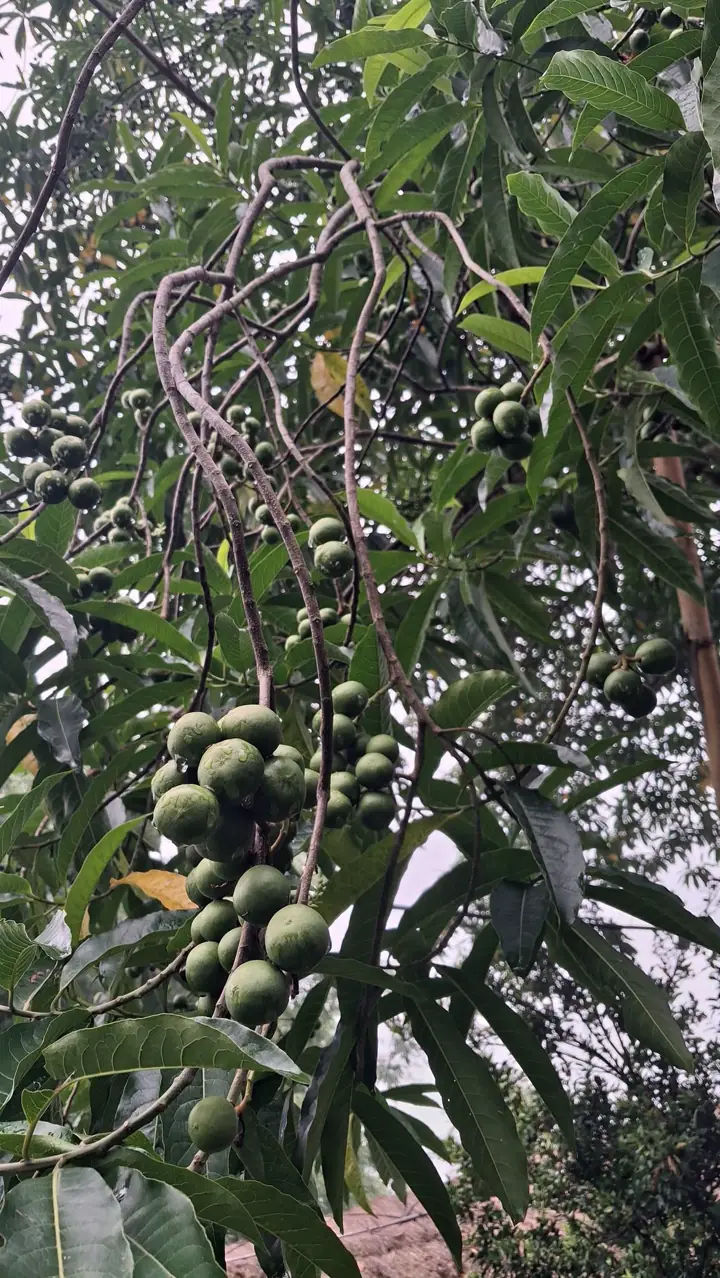
Rudraksha tree heavy with fruitPhoto: Kathmandu Rudraksha (kathmandurudraksha.com)Full size (720 × 1278) 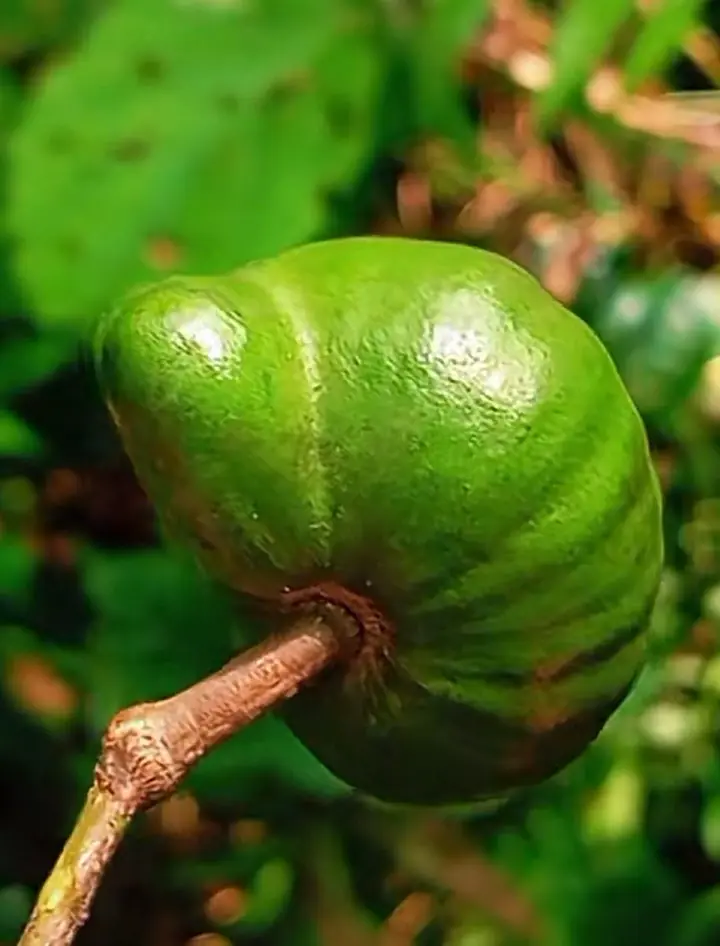
Green rudraksha fruit on the branchPhoto: Kathmandu Rudraksha (kathmandurudraksha.com)Full size (720 × 946) 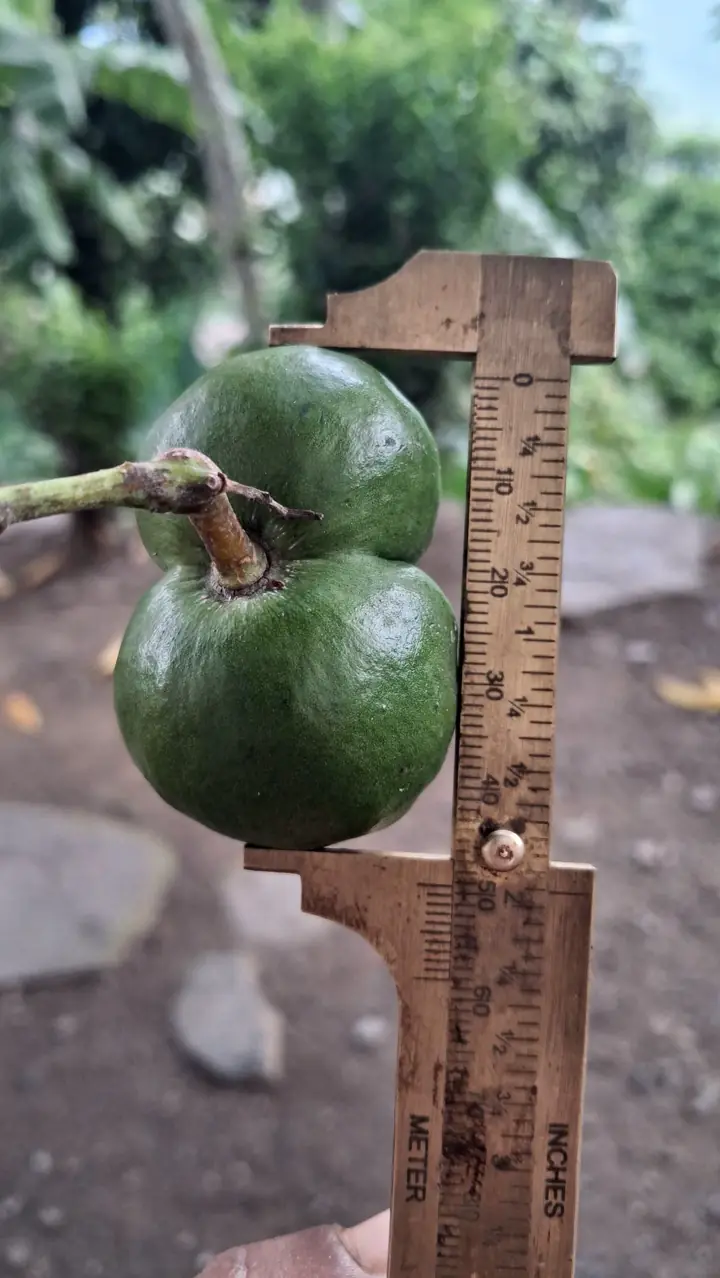
Rudraksha fruit measured with calipersPhoto: Kathmandu Rudraksha (kathmandurudraksha.com)Full size (720 × 1278) 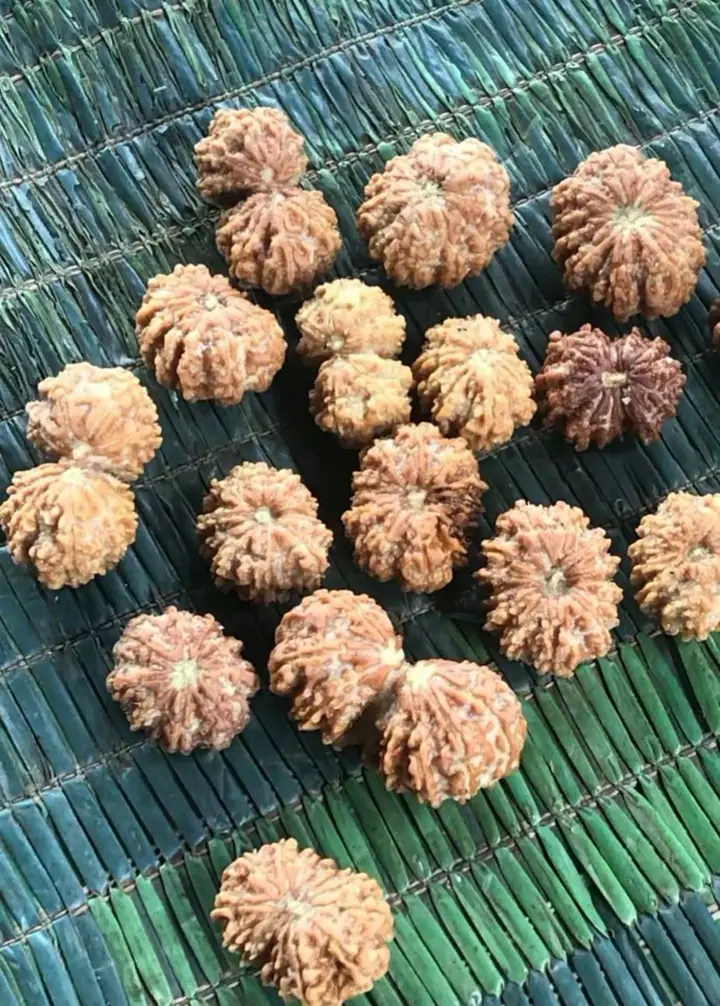
Rudraksha beads drying on a matPhoto: Kathmandu Rudraksha (kathmandurudraksha.com)Full size (720 × 1006) 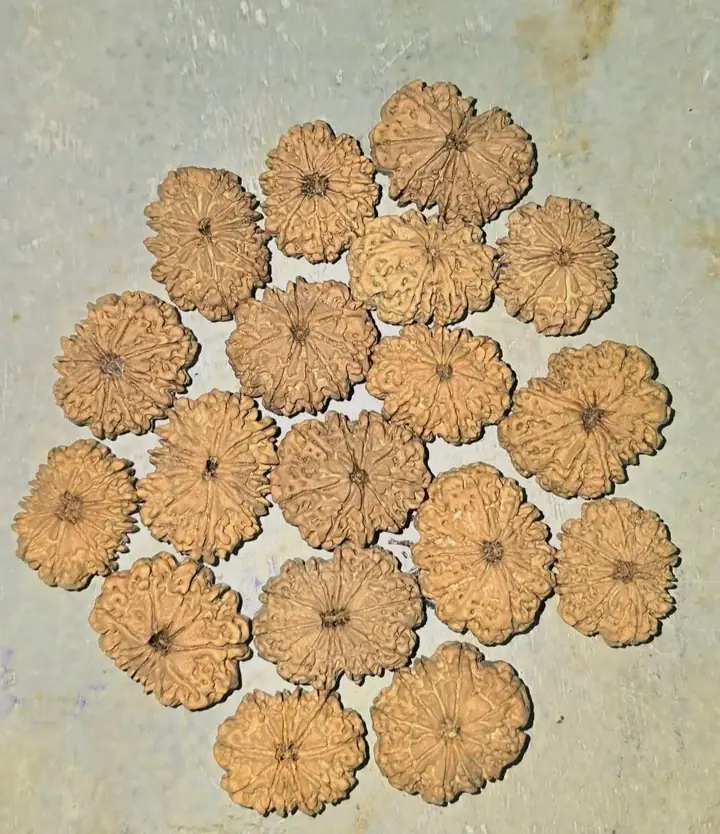
Rudraksha beads laid out to sortPhoto: Kathmandu Rudraksha (kathmandurudraksha.com)Full size (720 × 834) 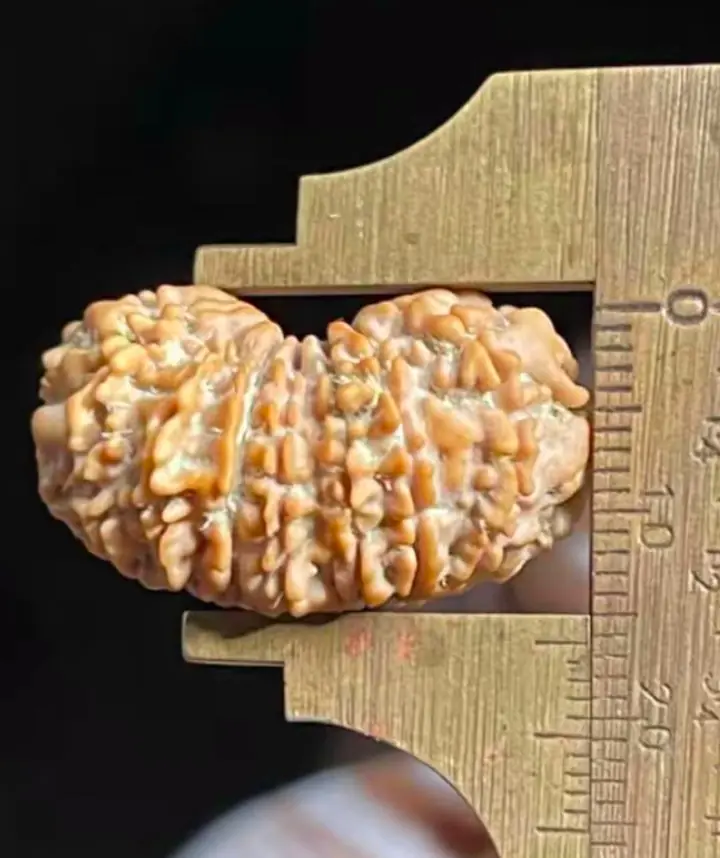
A rudraksha bead in calipersPhoto: Kathmandu Rudraksha (kathmandurudraksha.com)Full size (720 × 858) 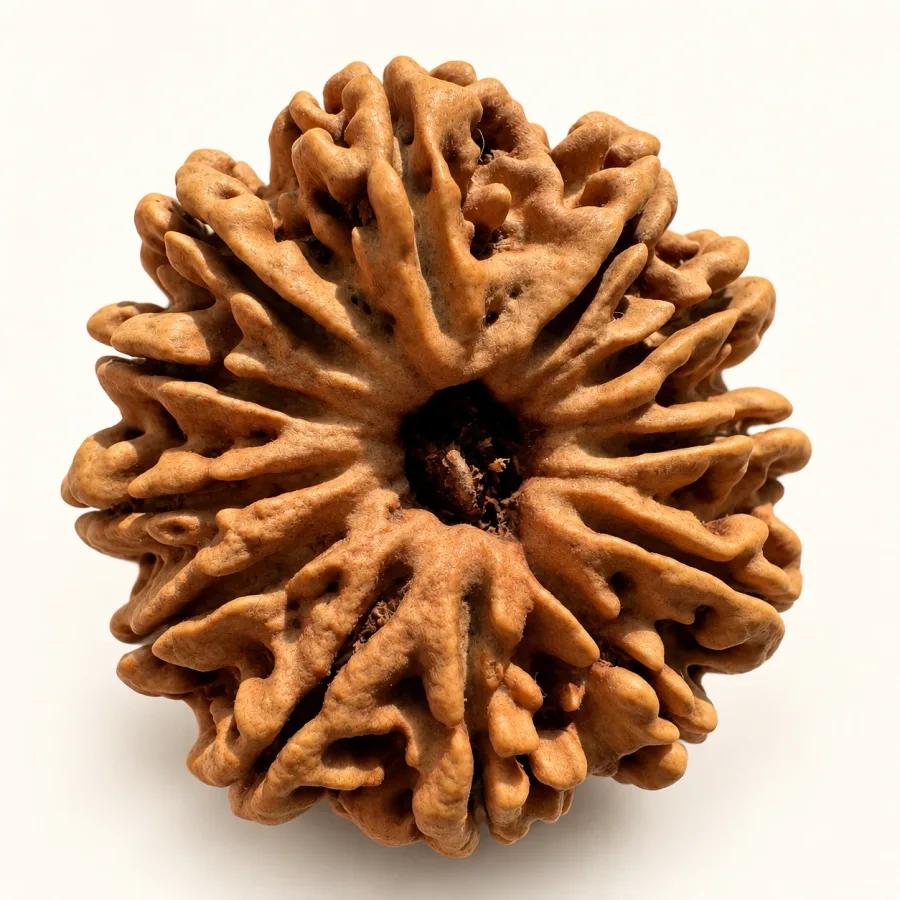
Twelve Mukhi RudrakshaPhoto: Kathmandu Rudraksha (kathmandurudraksha.com)Full size (900 × 900) 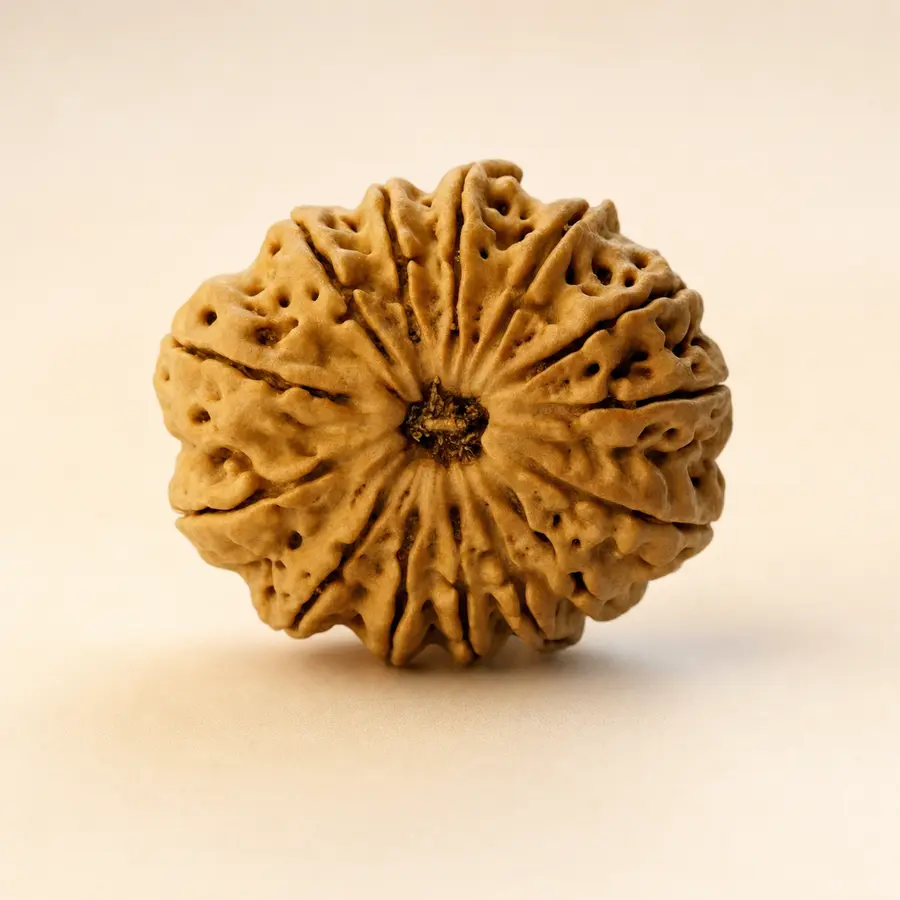
Fourteen Mukhi RudrakshaPhoto: Kathmandu Rudraksha (kathmandurudraksha.com)Full size (900 × 900) 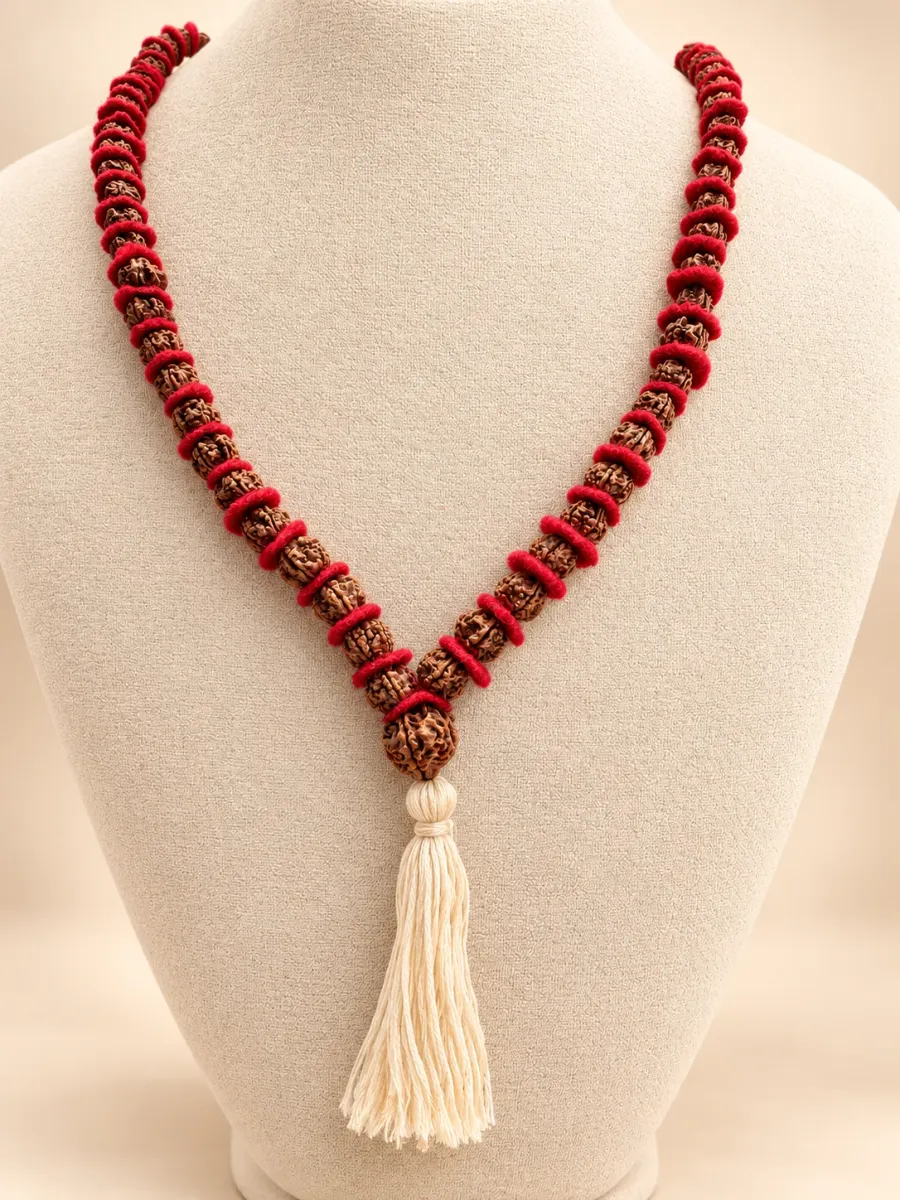
5 Mukhi Nepali Japa Mala, 10 mm beadsPhoto: Kathmandu Rudraksha (kathmandurudraksha.com)Full size (900 × 1200) 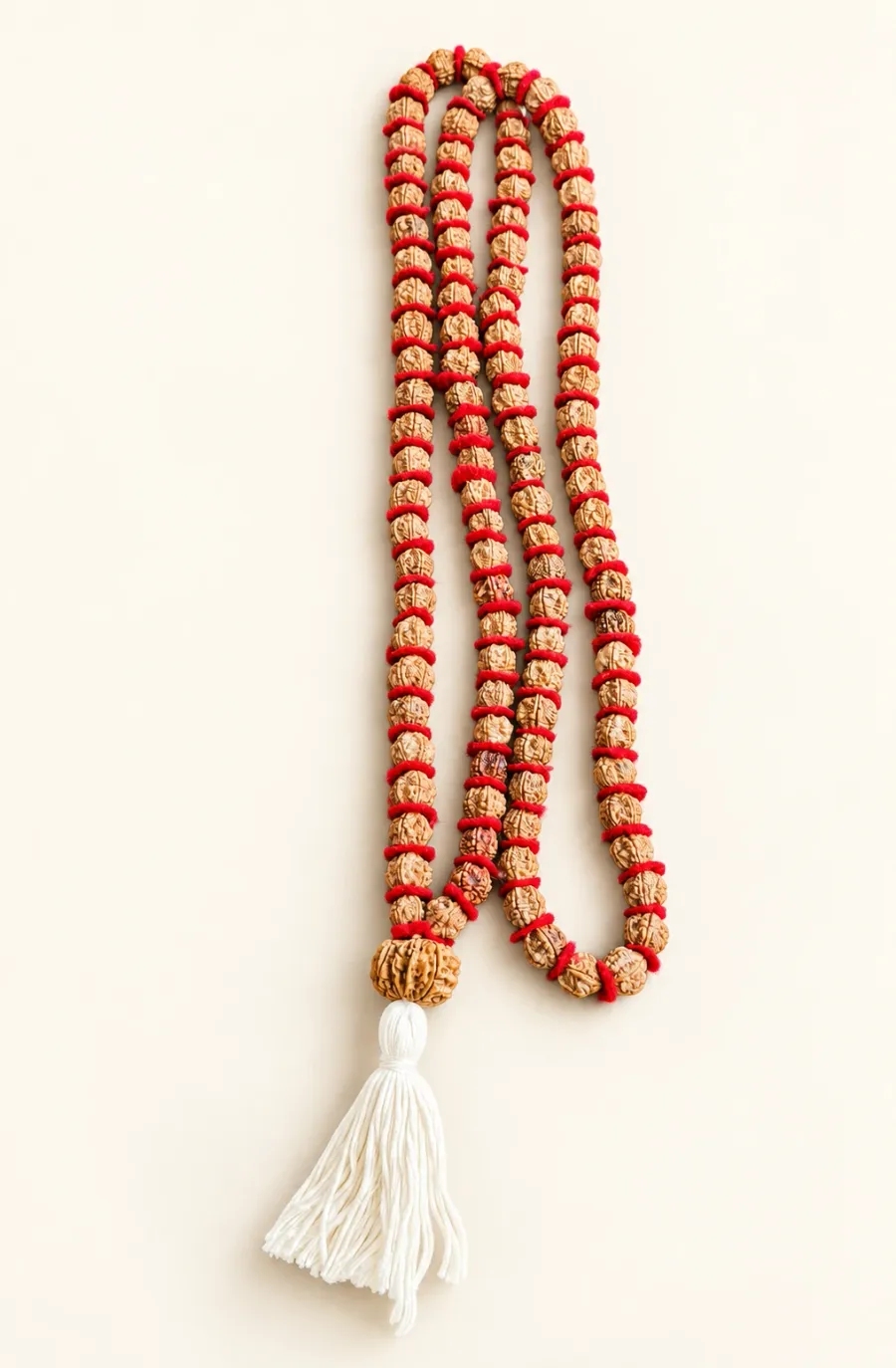
5 Mukhi Japa Mala with a 9 Mukhi guru bead, 10 mmPhoto: Kathmandu Rudraksha (kathmandurudraksha.com)Full size (900 × 1374) 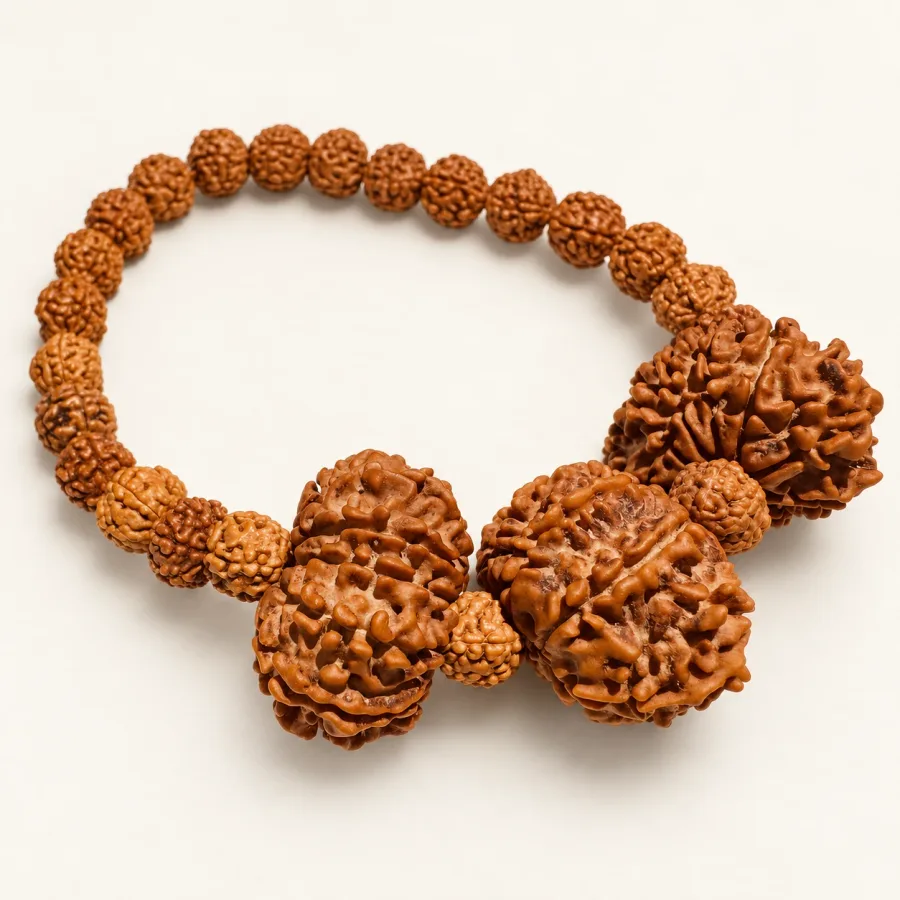
Courage & Clarity Bracelet, 11–8–11 MukhiPhoto: Kathmandu Rudraksha (kathmandurudraksha.com)Full size (900 × 900) 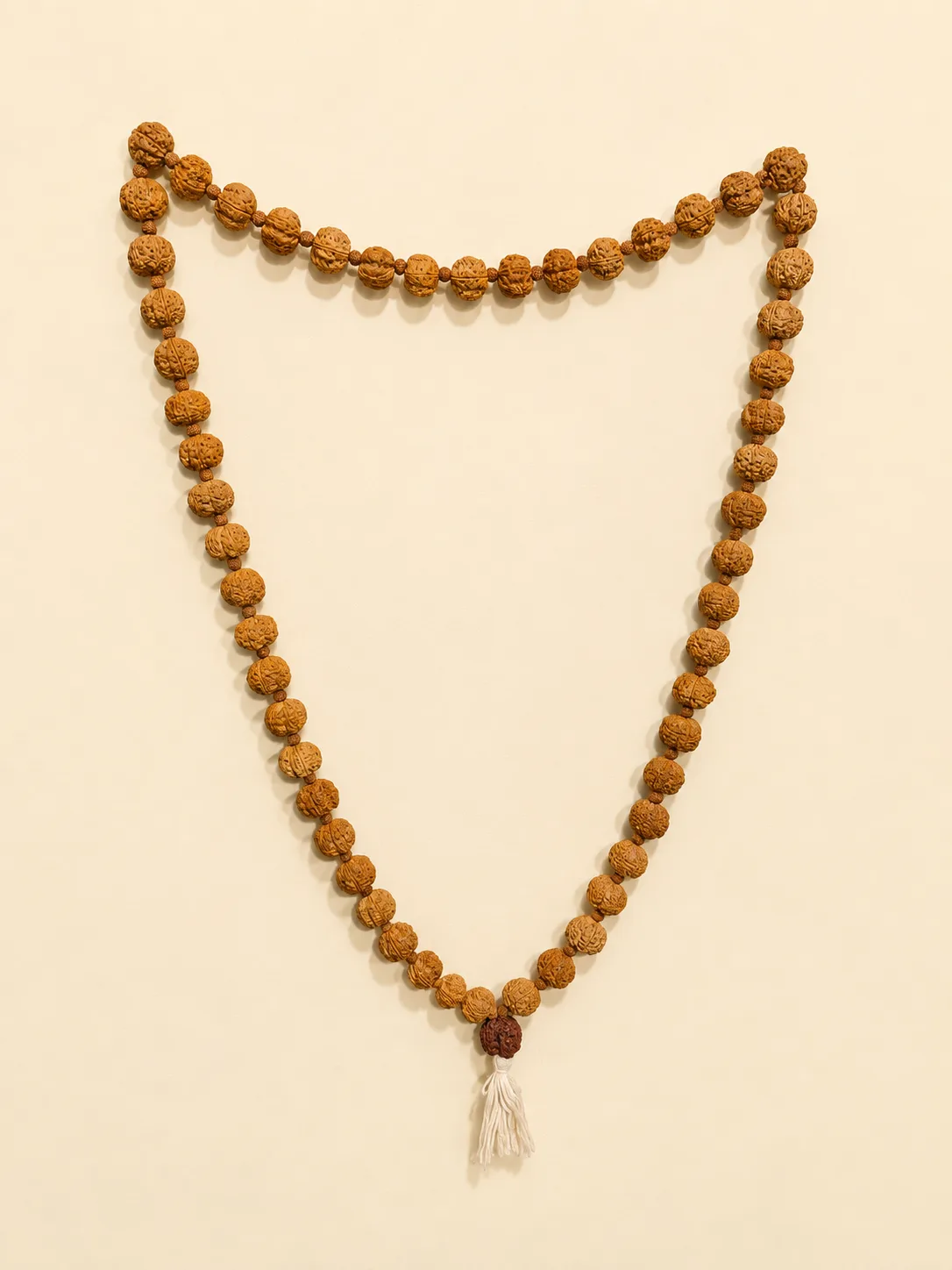
54 Bead 5 Mukhi Rudraksha MalaPhoto: Kathmandu Rudraksha (kathmandurudraksha.com)Full size (1086 × 1448)
Chart: Rudraksha 1–21 Mukhi at a glance
The presiding deity, the planet and what each bead is traditionally worn for, from 1 to 21 Mukhi, as our rudraksha benefits page gives them. Free to embed: paste the code below and it links back with the credit.
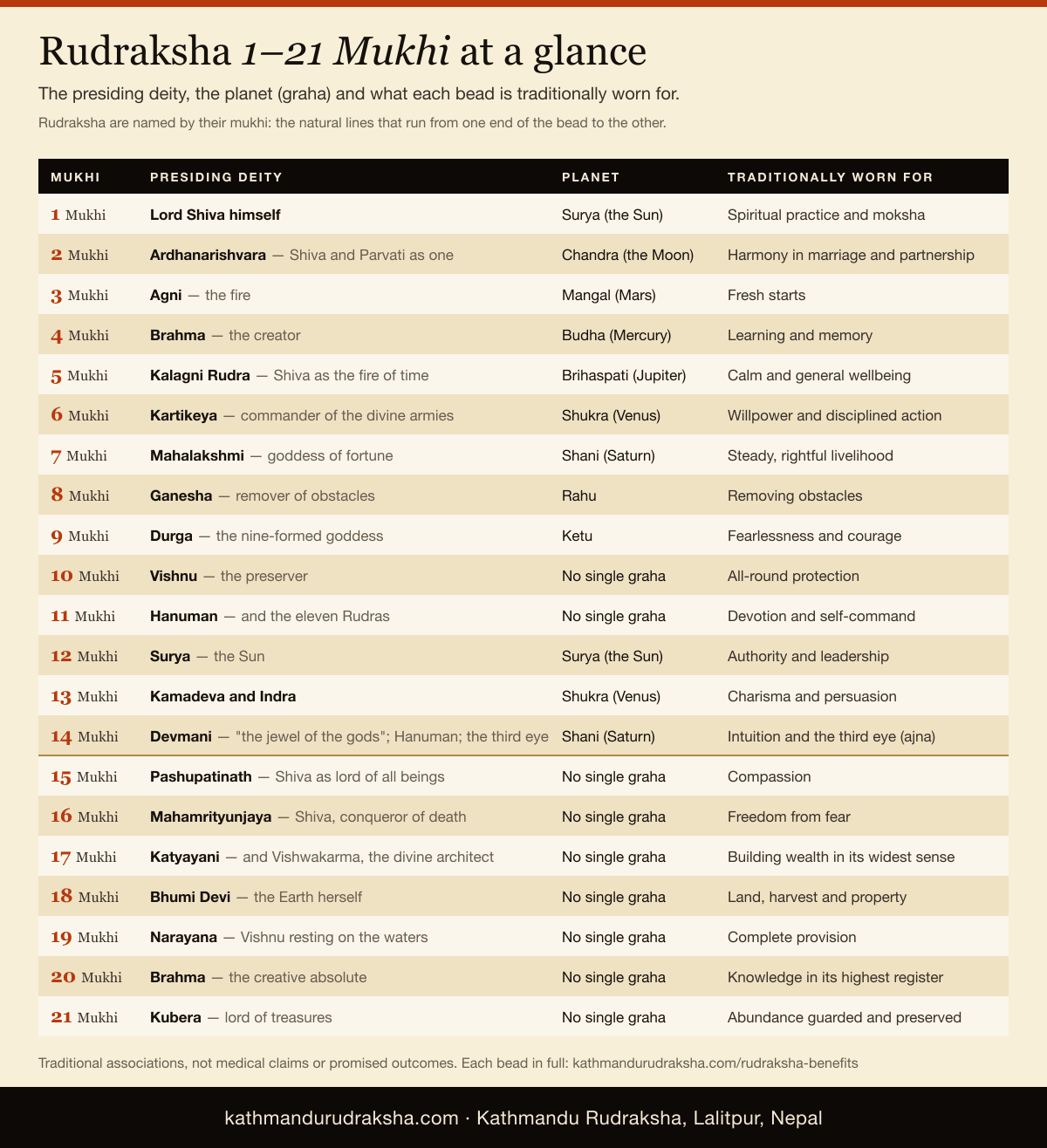
Full-size PNG (1200 px wide) · 1200 × 630 version for social posts
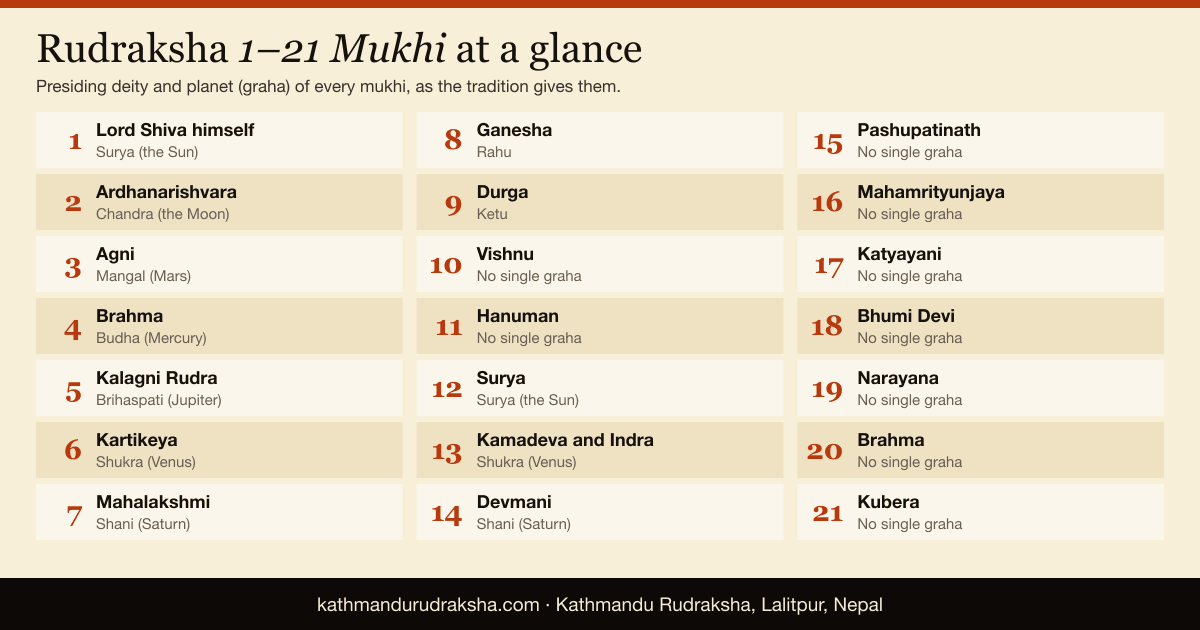
<a href="https://kathmandurudraksha.com/rudraksha-benefits"><img src="https://kathmandurudraksha.com/press/rudraksha-mukhi-chart.png" alt="Rudraksha 1 to 21 Mukhi chart — Kathmandu Rudraksha" width="1200"></a><br>Chart: <a href="https://kathmandurudraksha.com/rudraksha-benefits">Kathmandu Rudraksha</a>Press contact
For interviews, a photograph of a particular bead, or a fact checked, write to us. A person from the shop replies during 9 AM – 7 PM Nepal time (NPT).
- WhatsApp: +977 9716624339
- Email: hello@kathmandurudraksha.com