Authenticity
How to Count the Mukhi Lines on a Rudraksha
The count decides the price, so miscounting is expensive. Here is the method we use on the sorting table in Kathmandu — and the three things that fool people.
By Kathmandu Rudraksha · Published 2 September 2026
How do you count mukhi lines on a rudraksha?
Hold the bead so one drill hole faces you, and find a groove that runs the whole way from that hole to the hole at the other end without stopping or joining another. That is one mukhi. Turn the bead slowly on its axis in daylight and count every groove that does the same. Only complete clefts count — a line that fades halfway is surface texture, not a face.
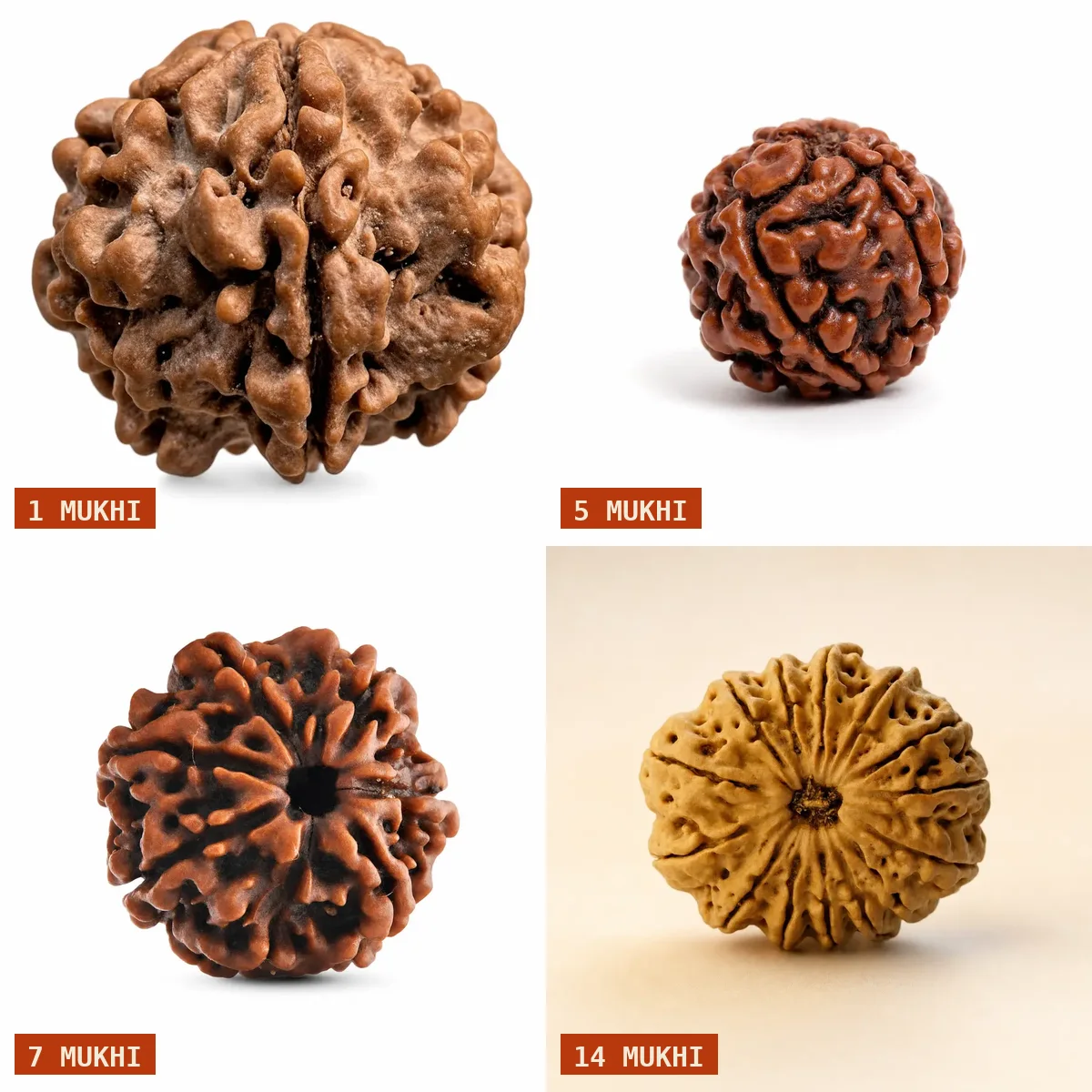
The count matters because it sets the price. A five mukhi and a fourteen mukhi from the same tree, the same size and the same finish, are separated by an order of magnitude in what they cost, and the only visible difference is the number of lines. That is also why counting is worth doing carefully before money changes hands rather than after. If you are still deciding whether a bead is genuine at all, how to identify real Nepali rudraksha covers the wider question; this guide is only about the count.
Where the lines come from, and why the count is fixed
A rudraksha is the stone of a fruit. Inside, the stone is divided into compartments, each holding a seed. Where the walls between those compartments reach the surface, a groove runs from pole to pole. Those grooves are the mukhi, and their number is settled while the fruit is still developing on the tree.
Two things follow from that. First, the count is a fact about the bead’s internal structure, not a decoration applied to the outside: a genuine bead has exactly as many internal chambers as it has external lines, and a line carved on afterwards has no chamber behind it. Second, the count cannot change. A bead does not gain or lose a face with age, oiling, or wear.
The method, step by step
Work in daylight near a window rather than under a ceiling bulb. Overhead light throws shadows down the grooves that read as extra lines, and warm indoor light flattens the shallow ones until they disappear.
Mark your starting groove — rest a thumbnail against it, or note the one nearest a blemish. Counting a round object without a fixed start is how people arrive at a different answer each time.
Rotate the bead in one direction only, a fraction at a time, and count each groove as it reaches the centre of your view rather than at the edge. A groove seen obliquely at the rim is the easiest one to double-count.
Then count again in the other direction. If the two counts disagree, the bead has at least one line you are reading wrongly, and the next section is probably why.
Three things that produce a wrong count
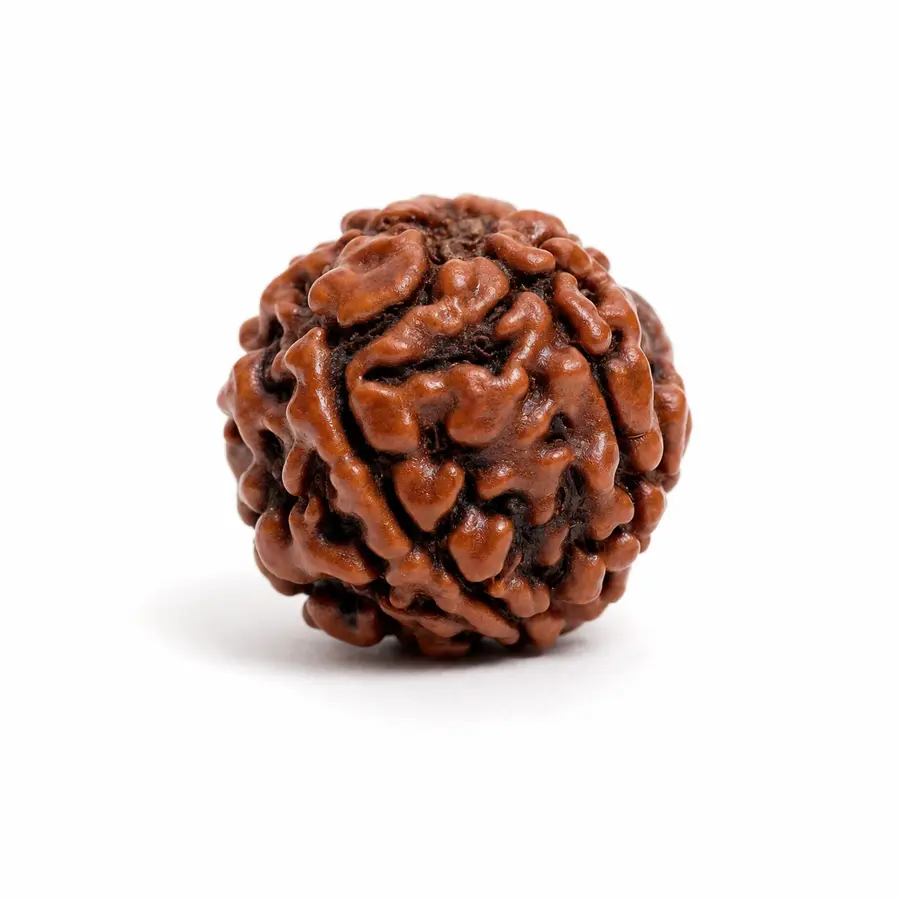
The first is a line that stops. Genuine faces run pole to pole. Shorter grooves and surface wrinkles are common, particularly on larger beads, and they do not count. Trace each candidate the whole way with a fingernail before you accept it.
The second is two lines that meet. Grooves sometimes converge near a pole and separate again in the middle. That is one face where they join and two where they part — follow the pair along the full length and count the number that arrive at the far hole separately.
The third is a bead too small or too shallow to read at all. Java produces enormous quantities of small stones with shallow grooves; the Nepali hills produce fewer, larger stones with deeper lines. Both are genuine rudraksha, but on a small shallow-grooved bead the honest answer is often that the naked eye cannot settle it. A jeweller’s loupe helps. On the counts where the price difference is large, ask for close photographs of the exact bead from several angles before you pay, and see the identification guide for what to look for.
Counting a whole mala
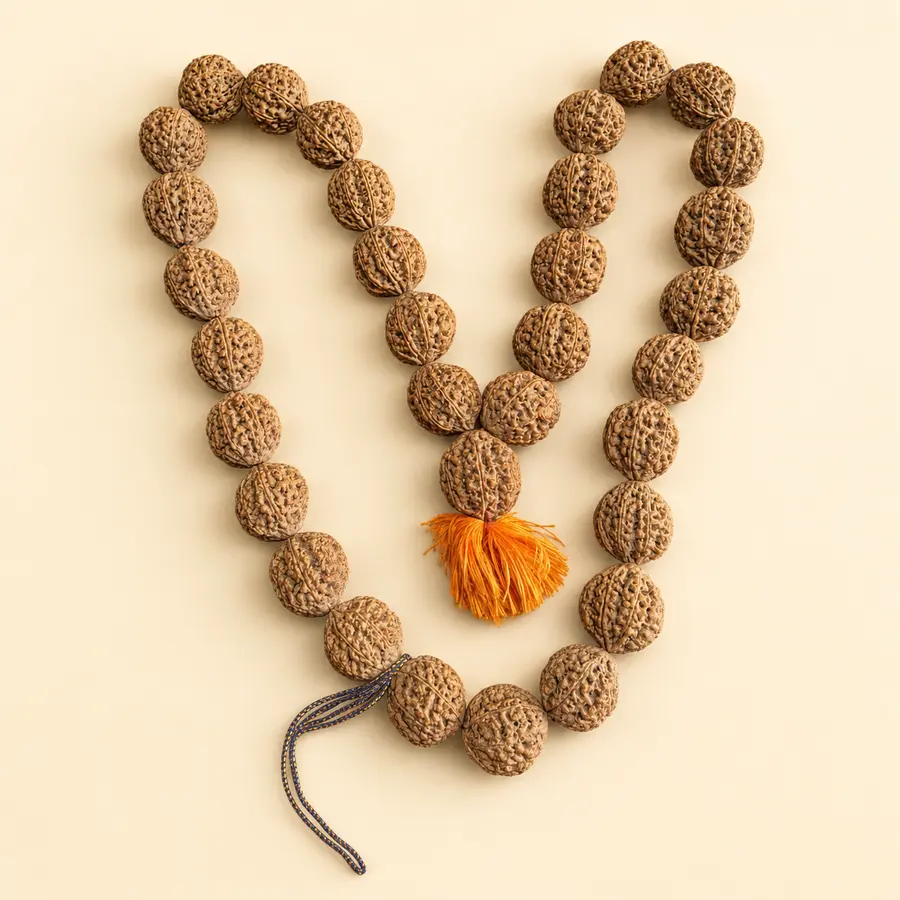
A japa mala is 108 beads plus the bindu, the extra bead that marks the start. Count the beads first; a strand sold as 108 that holds 104 is a different product from the one you agreed to buy.
Then check the mukhi on a random sample rather than the first few. Ten to fifteen beads spread along the strand tells you far more than fifteen consecutive ones, because a strand padded with off-count beads is rarely padded at the ends where a buyer looks first.
What the count does not tell you
The count is not a grade. A five mukhi is the most common bead there is, which is exactly why it is inexpensive and why most people wear one; a fourteen mukhi is rare, which is why it costs what it does. Rarity and price move together. Neither is a measure of quality, and a well-formed five mukhi with deep clean grooves is a better bead than a damaged high-count one at any price.
Size is a separate axis again, and it moves the price independently — bead size versus mukhi count covers how the two interact. If you want to see the counts side by side before choosing, the full mukhi chart lists what each is traditionally associated with, and you can browse every mukhi we carry with photographs of the actual beads.
Frequently asked questions
How do I count the mukhi on a rudraksha?
Hold the bead with one drill hole facing you and count only the grooves that run unbroken to the hole at the other end. Rotate slowly in daylight, mark your starting groove, and count twice in opposite directions.
Do partial lines count as mukhi?
No. Only a cleft that runs the full length from one hole to the other is a face. Short grooves and surface wrinkles are common on larger beads and are not counted.
Why do I get a different number each time I count?
Usually one of three things: no fixed starting point, counting grooves at the edge of your view where they are seen obliquely, or a pair of lines that converge near a pole and separate in the middle.
Can the mukhi count of a bead change over time?
No. The count is set by the number of internal compartments while the fruit develops on the tree. Wear, oiling and age do not add or remove a face.
What if the bead is too small to count by eye?
A loupe helps on small or shallow-grooved beads. Where the price difference between two counts is significant, ask the seller for close photographs of the exact bead from several angles before you pay.
Does a higher mukhi count mean a better bead?
No. It means a rarer one. Price follows scarcity, not quality — a well-formed five mukhi with deep clean grooves is a better bead than a damaged high-count stone.
Where to go next
- Authenticity & verification
- Browse all Mukhi Rudraksha
- Rare Rudraksha
- Why Does a Rudraksha Rotate Between Two Coins?…
Keep reading
- How to Identify Original Rudraksha — Real vs Fake, Check by Check
- Which Rudraksha Should You Wear? By Intention, Rashi, and Date of Birth
- 18 Mukhi Gauri Shankar Rudraksha: Benefits, Meaning and the Count
- What Is Mukhi in Rudraksha? A Clear Guide to the Faces
- Is Rudraksha Allowed in Flight? Carry-On, Checked Bags and Customs