Siddha Mala — Nine Variants
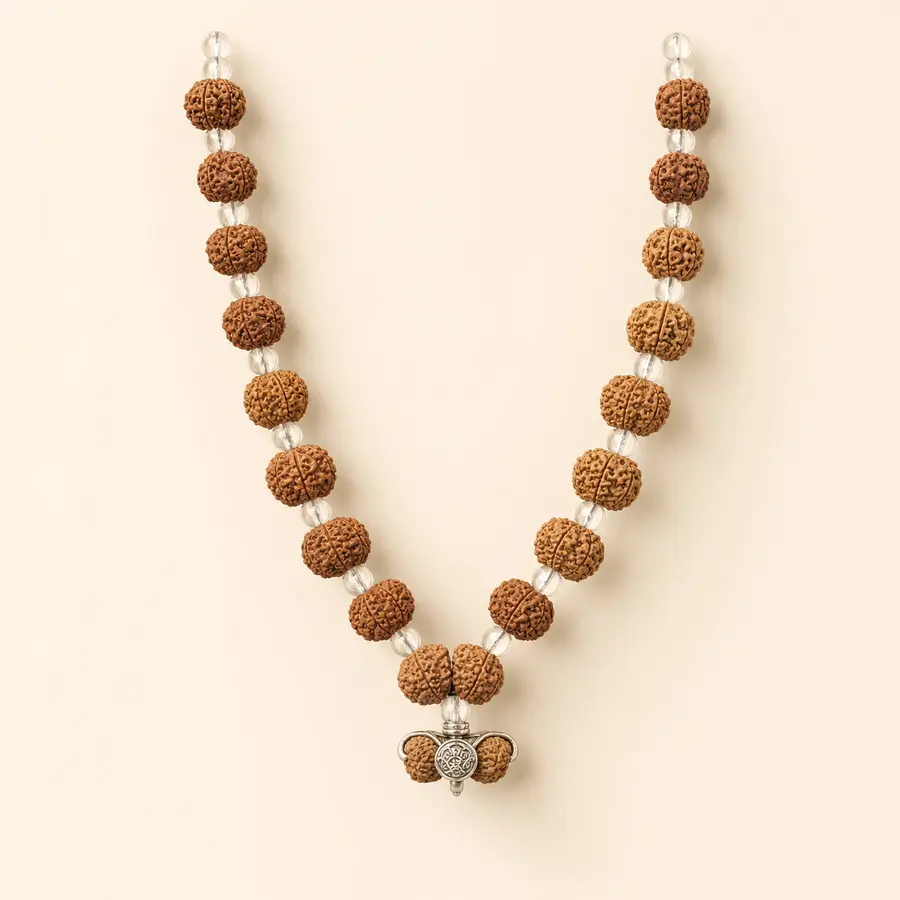
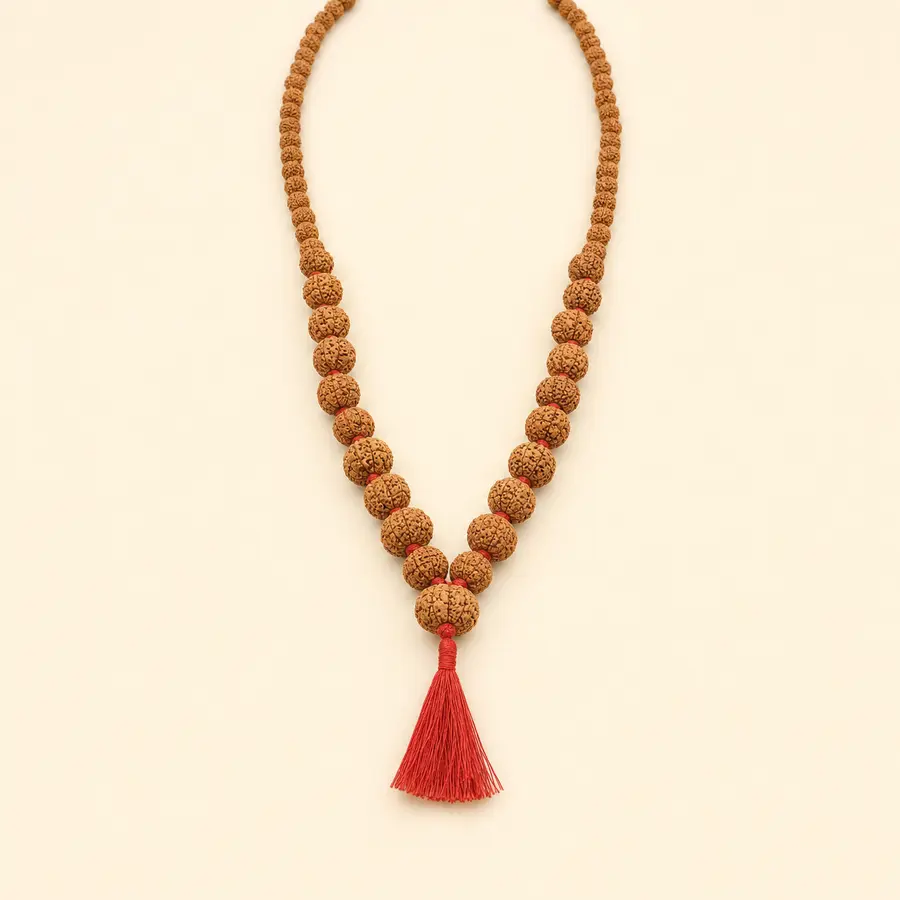
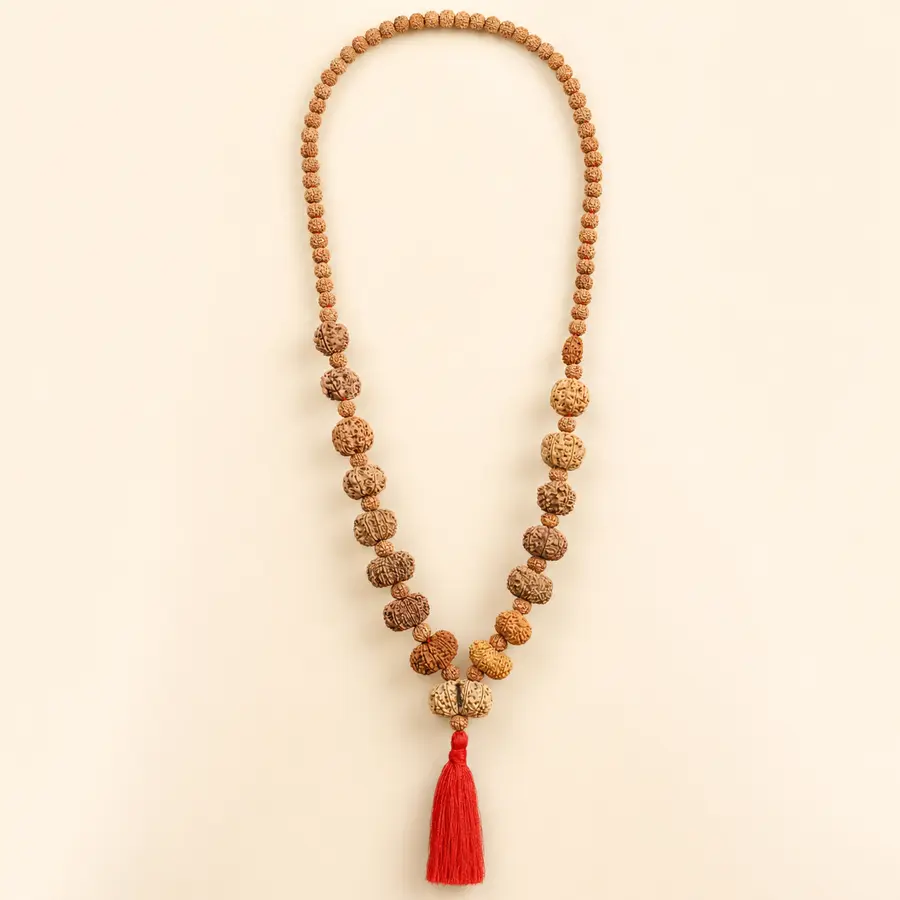
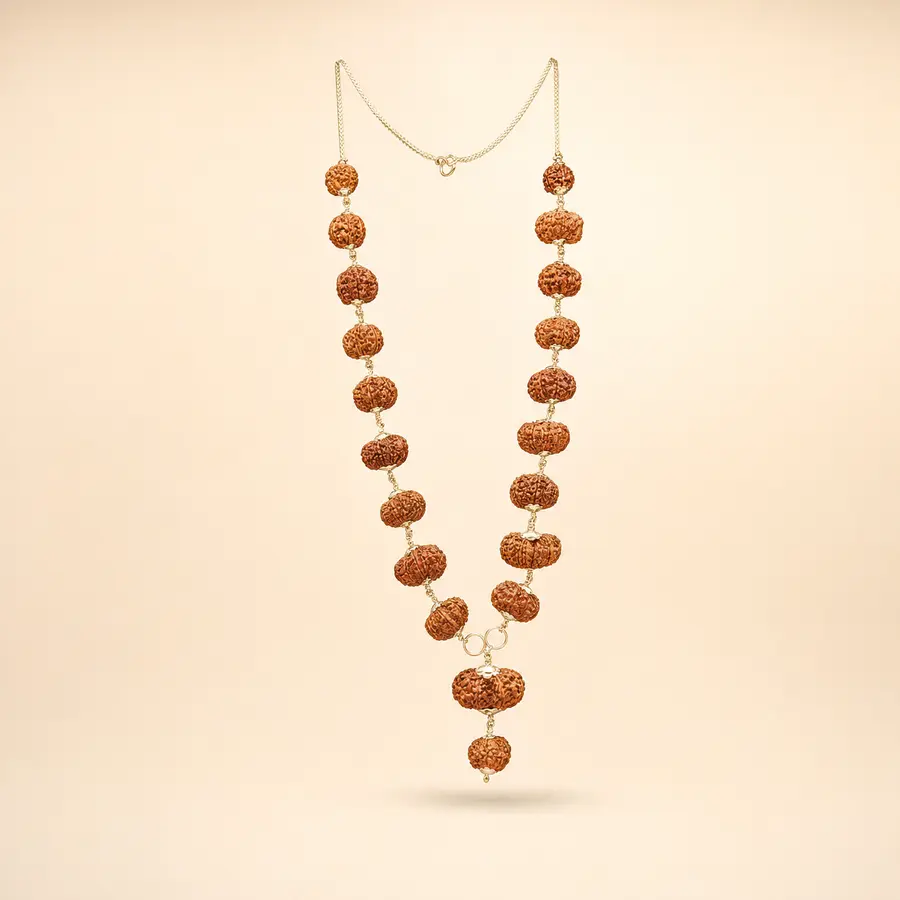
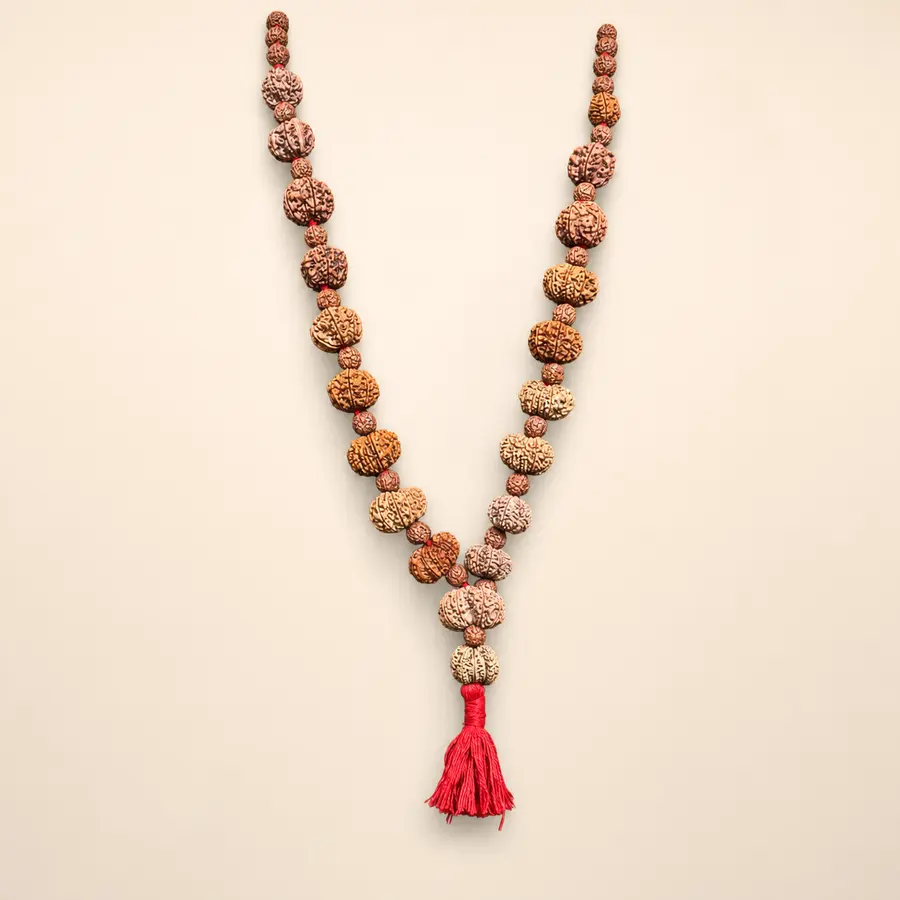
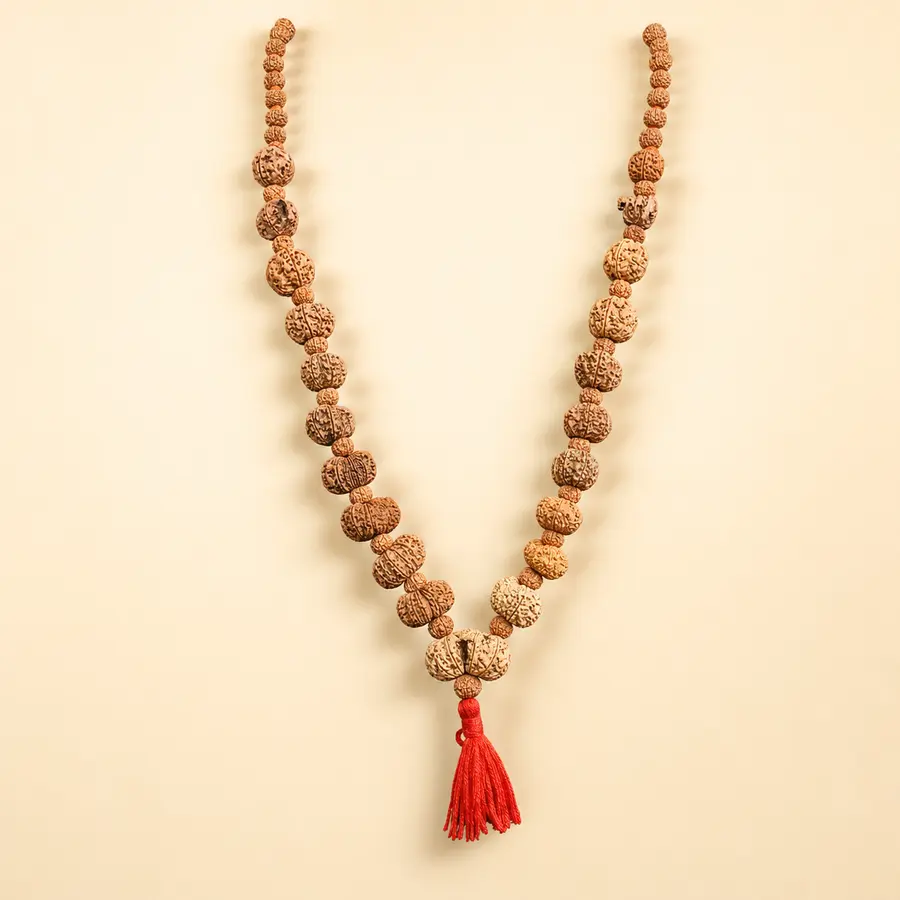
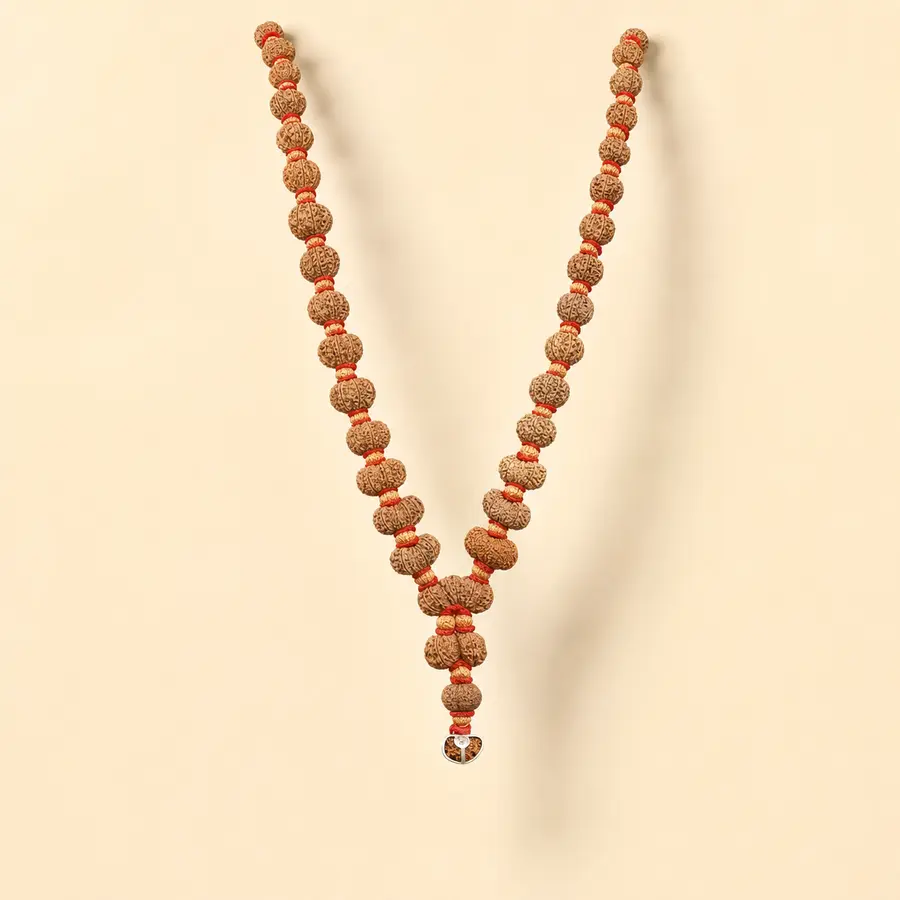
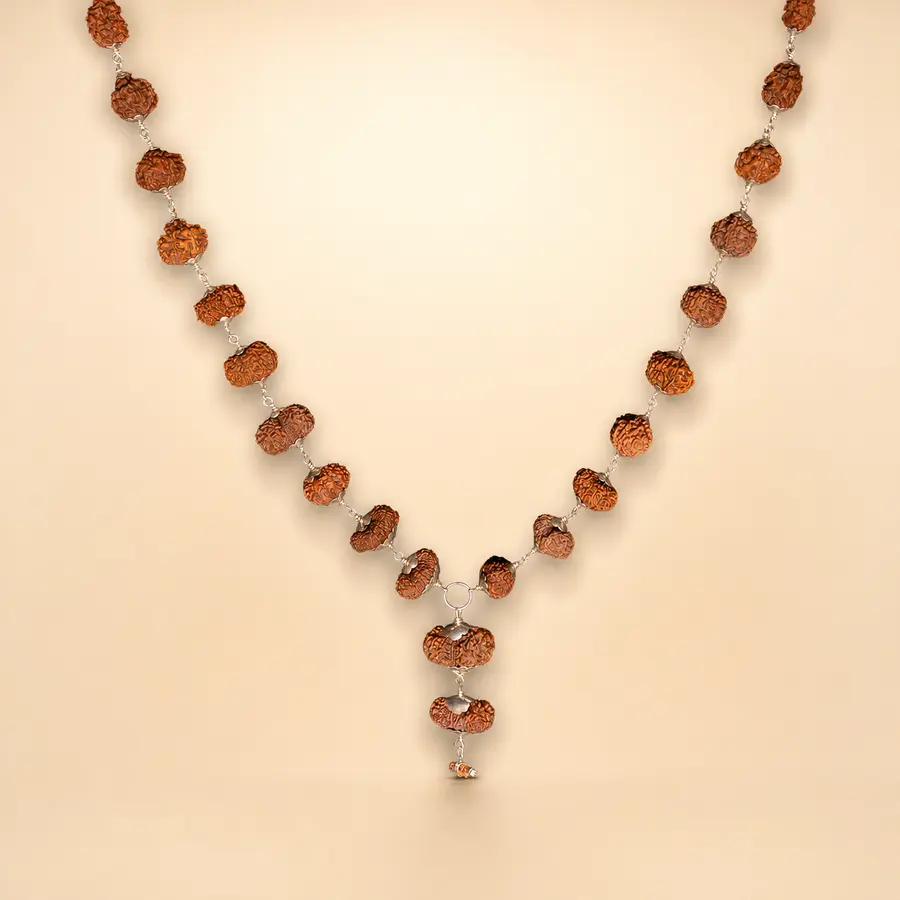
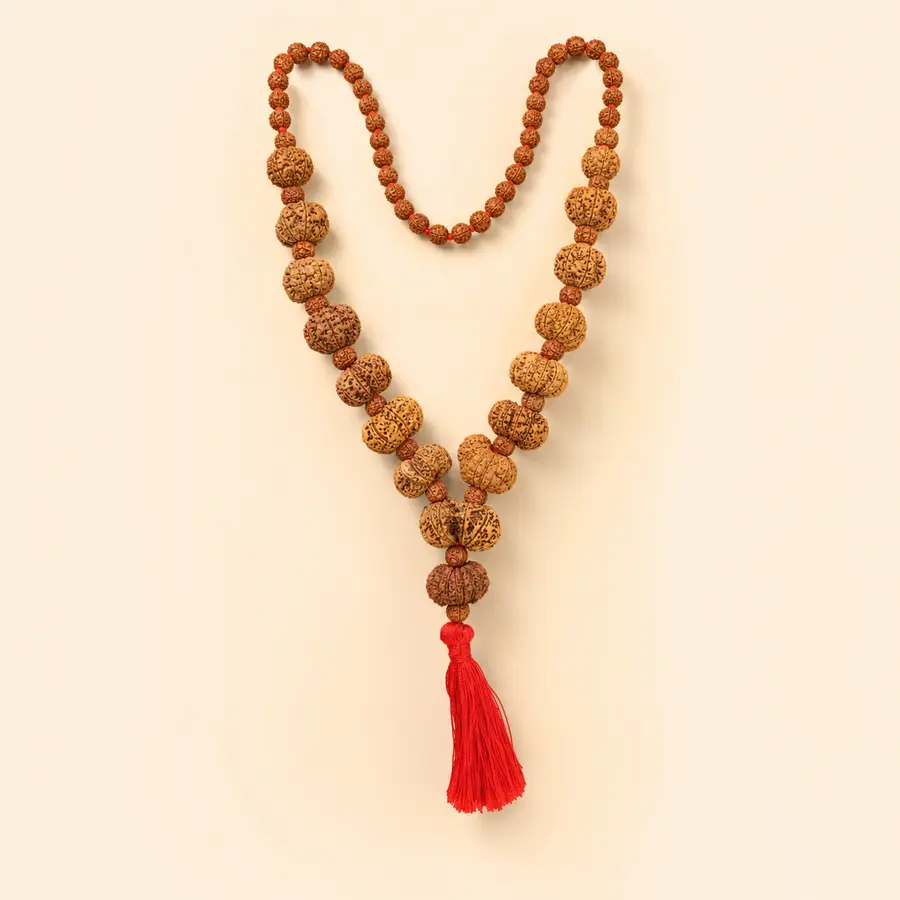
A Siddha Mala holds one rudraksh bead of each Mukhi from One through Fourteen, hand-knotted in the traditional sequence — the most complete arrangement of Rudraksha a person can wear. We offer nine variants, from the everyday Economy through the Indra and Maha Mrityunjaya Siddha Malas. Pran Pratishtha (energization) at the Pashupatinath complex is available on request, with photographs of your own mala at the ritual.
What a Siddha Mala is, and what makes the variants differ
A Siddha Mala holds one rudraksha of each mukhi from one to fourteen, strung in sequence. That is the whole definition, and it is also the difficulty: a mala is only as available as its scarcest bead, and the one mukhi is the scarcest bead there is. Everything that separates one Siddha Mala from another comes down to which grade of that sequence the maker could actually assemble.
Our nine variants run from the Economy, built on honest working beads, through to the Indra Mala and the Maha Mrityunjaya, where the sizes are matched, the surfaces are clean and the higher counts are pieces we would not otherwise let go. We hand-knot every one in Kathmandu — a knot between each bead, so a broken thread costs you one bead rather than the whole sequence.
The mala can be energized before it ships. Pran Pratishtha is performed at the Pashupatinath temple complex on request, and we send photographs and video of your own mala at the ritual rather than a stock image of someone else’s. This is offered because people ask for it, not because a mala is somehow deficient without it.
Because the composition of each variant depends on the season’s beads, we photograph the actual mala — all fourteen counts, laid out — and send it on WhatsApp before any payment. If a bead in it is not what you expected, nothing has been spent.
What the Pran Pratishtha at Pashupatinath actually involves, step by step, is described on the energization page.
Read before you choose.
Questions about the Siddha Mala
What is a Siddha Mala?
A mala containing one rudraksha of each mukhi from one through fourteen, knotted in order. It is worn as a single complete sequence rather than as a japa mala for counting, and in the tradition it is regarded as the most comprehensive arrangement of beads a person can wear.
What is the difference between a Siddha Mala and an Indra Mala?
The Indra Mala is the highest of the Siddha Mala variants — the same one-to-fourteen sequence, but assembled from beads selected for size match, surface and clarity of the clefts, including the rare higher counts in grades we would otherwise keep back. It is a difference of what went into the sequence, not of what the sequence is.
How much does a Siddha Mala cost?
The Economy variants are the accessible end and the Indra Mala the far one; the spread is wide because the one mukhi and the counts above eleven decide the price on their own. Each variant on this page carries its own figure, and we will give you the rupee equivalent on WhatsApp before you decide anything.
Should a Siddha Mala be energized before wearing?
Many wearers want it, and we arrange Pran Pratishtha at the Pashupatinath complex on request, with photographs and video of your own mala at the ritual. The tradition also preserves a simple home procedure that any wearer can perform themselves. We do not treat energization as compulsory, and we will not tell you a mala is inert without it.
Can I wear a Siddha Mala every day?
Yes, and most owners do. It is hand-knotted for that reason. The ordinary care applies to any rudraksh mala: keep it off during oiling or chemical treatment, let it dry naturally if it gets wet, and have it re-knotted every few years if you wear it daily.
Do you ship Siddha Malas to India?
Yes — tracked from Kathmandu to any Indian address, typically three to twelve days, quoted in rupees alongside dollars. Payment is settled on WhatsApp after you have seen photographs of the actual mala; cash on delivery is not available on this route.
Not sure which one?
Message us on WhatsApp. We'll send you photos of what's in stock today and help you choose based on your intention. Reply within hours from Kathmandu.
Free WhatsApp consultation