
Japa Mala for Meditation
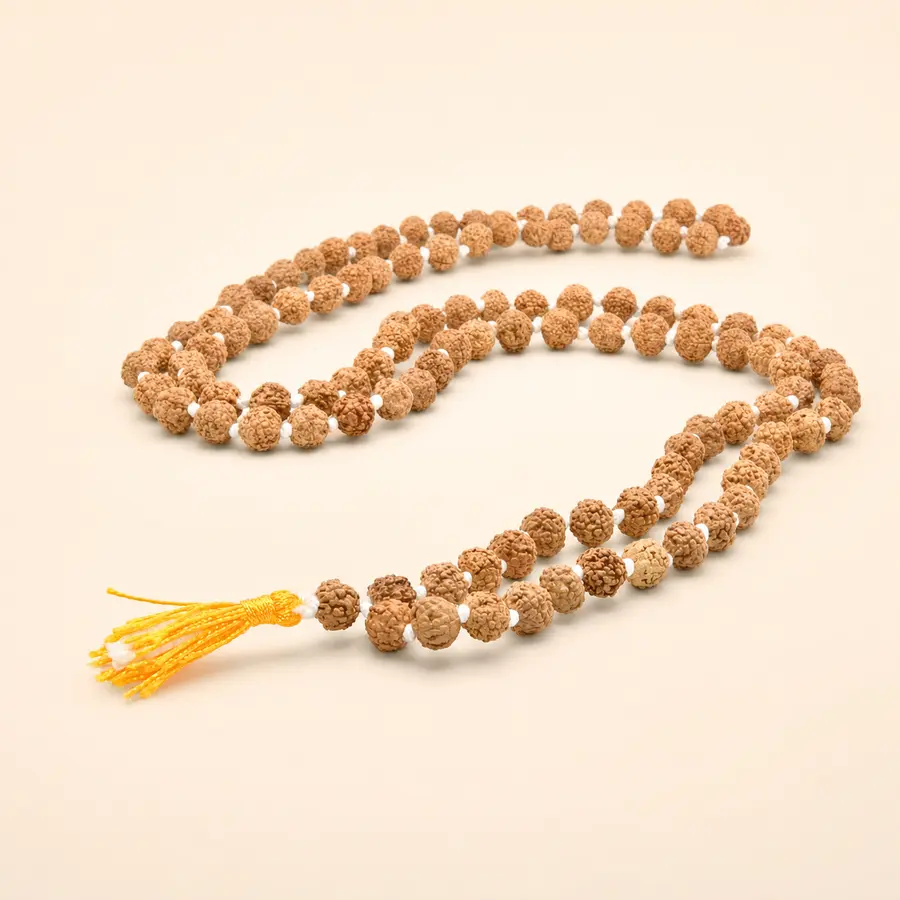
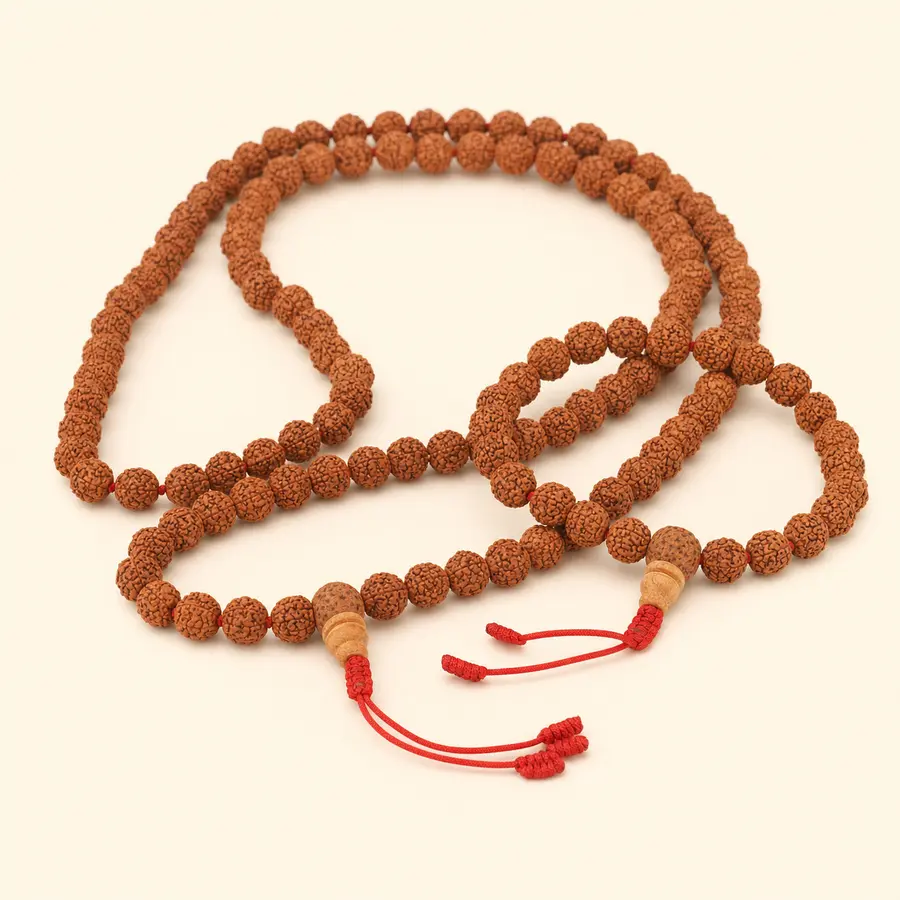
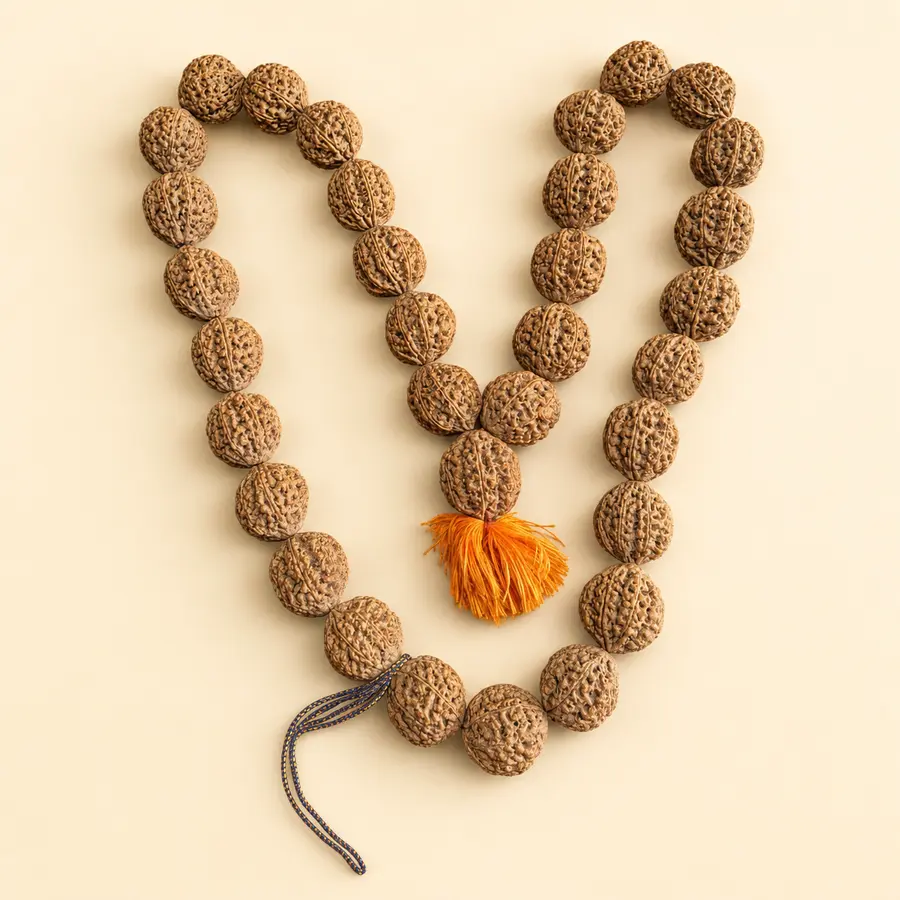
108-bead Rudraksha japa malas for daily practice, knotted between every bead so a broken thread costs you one bead and not the whole mala. The count of 108 plus the bindu is fixed across the tradition. We offer the standard 108-bead rudraksh mala, a premium size-matched grade, and the 33-bead Kantha, all hand-knotted in Kathmandu.
Why 108 beads, and what to look for in a japa mala
A japa mala carries one hundred and eight beads plus a bindu — the summit bead, also called the sumeru or guru bead — which marks the beginning and the end of a round. The count is fixed across the tradition, and in practice it is what makes the mala work: your thumb finds the bindu, you know a round is complete, and you turn the mala rather than crossing that bead.
What separates one rudraksh mala from another is knotting and matching. We knot between every bead, which keeps the beads from grinding against each other and means a broken thread loses you one bead instead of scattering a hundred and eight across the floor. Matching is slower work still: a hundred and eight beads of even size and colour take a great deal more sorting than a hundred and eight beads.
The standard mala is built from five mukhi beads, the count the tradition holds suitable for every wearer, and it is the right mala for anyone beginning a daily practice. The premium grade is the same construction with tighter size matching and cleaner surfaces. The thirty-three bead Kantha is worn at the throat and is the piece to ask about if a full mala is more than you want around your neck.
Prices begin at $55 (≈ ₹4,550) for the standard hundred-and-eight, and every mala is photographed for you — laid out flat so you can see the size consistency along its whole length — before any payment is taken.
The complete one-to-fourteen sequence, worn rather than counted, is the Siddha Mala; loose beads of every mukhi count are on the main rudraksha page.
Read before you choose.
Questions about japa malas
Why does a japa mala have 108 beads?
The number is settled across the Indian traditions and is given many readings — the sacred names, the divisions of the sky, the breath count of a day. What matters in use is that the count is fixed and shared, so a round is a round whoever is counting it. The extra bead, the bindu or sumeru, is not part of the hundred and eight.
How do you use a rudraksha mala for japa?
Hold the mala so it hangs clear of the ground, start at the bead beside the bindu, and move one bead per repetition with the thumb, drawing each toward you. At the end of the round you reach the bindu again; the usual practice is to turn the mala and go back the way you came rather than pass over it. The middle finger commonly carries the mala and the index finger is kept off it.
What is the difference between a japa mala and a Siddha Mala?
A japa mala is a hundred and eight beads of a single mukhi count, built for counting repetitions. A Siddha Mala is one bead of each mukhi from one to fourteen, worn as a complete sequence and not used for counting at all. Different objects for different purposes.
How much does an original rudraksha mala cost?
The standard hand-knotted hundred-and-eight bead mala starts at $55 (≈ ₹4,550). Premium grade costs more because the size-matching takes far longer and rejects far more beads. We will give you the rupee figure alongside the dollar one before you commit to anything.
How should a japa mala be cared for?
Keep it out of oil, perfume and chemicals, let it dry naturally if it gets wet, and store it somewhere it is not being crushed — a cloth bag is traditional and practical for the same reason. A daily-use mala benefits from re-knotting every few years; we do it for malas we made, and any competent bead worker can do it too.
Can the mala be energized before it ships?
Yes, on request — Pran Pratishtha at the Pashupatinath temple complex, with photographs and video of your own mala at the ritual rather than a stock image. The tradition also keeps a simple home procedure, and we will send you that instead if you would rather do it yourself. Neither is compulsory.
Do you ship malas to India?
Yes, tracked to any Indian address, typically three to twelve days from Kathmandu, priced in rupees alongside dollars. Tracking is sent the day the parcel leaves. Payment is settled on WhatsApp after you have seen photographs of your mala; there is no cash-on-delivery option into India.
Not sure which one?
Message us on WhatsApp. We'll send you photos of what's in stock today and help you choose based on your intention. Reply within hours from Kathmandu.
Free WhatsApp consultation